

Sell Your Arkansas Land for Cash — Fast, Fair Offers
From Conway and the Saline River commuter corridor to Hot Springs and the Ouachita National Forest gateway — we make written cash offers on Arkansas land in as little as 24 hours. No agents. No fees. No drawn-out listings. Tell us your county and acreage and we'll have a written offer in your inbox fast.
All 75 counties · any condition · cash
- No fees
- Any condition
- Offer in 24 hours
Own land in Arkansas?
Get a cash offer in 24 hours.
- 75 counties covered
- 21–30 days to close, typical
- $0 fees or closing costs to you
- 24 hrs to a real offer
The land we buy here
- Ozark hillside
- Delta row-crop edge
- Hardwood bottoms
- Hunting tract
- Inherited & overgrown
The counties we buy in across Arkansas
The Perspective Properties Advantage
Why Choose Us
-

Fair Cash Offers
We research every property thoroughly to ensure you receive a competitive, market-based offer.
-

Fast Closings
Close in as little as 14 days. Faster on clear-title parcels — and we work to your timeline if you need longer.
-

Zero Commissions
No agent fees, no commissions, no hidden costs. The offer we make is the amount you receive.
-

Flexible Closings
Choose the closing date that works for your schedule. We work around your timeline, not ours.
Simple 3-Step Process
How It Works
-

Request Your Cash Offer
Fill out our quick form or give us a call. Tell us about your property and we'll start reviewing it right away.
-

Receive a No-Obligation Offer
We'll research your property and present you with a fair, no-obligation cash offer in as little as 24 hours.
-

Close on Your Terms
Pick your closing date. We handle all the paperwork, cover all closing costs, and pay you cash at closing.
Arkansas Land Context
Arkansas Land: Little Rock Metro, Hot Springs Country, and the Ozark-Delta Edges
Arkansas land breaks into three distinct economies, and each one produces sellers for different reasons. Central Arkansas — Faulkner, Saline, and the Little Rock ring — is commuter country. Conway anchors Faulkner County as a tri-university town (University of Central Arkansas, Hendrix College, Central Baptist College) 30 miles north of Little Rock, and the Lake Conway area adds recreational land character alongside the residential growth. Saline County runs the Benton-Bryant corridor southwest of Little Rock as one of the state's faster-growing suburban edges, with the Saline River and Ouachita National Forest gateway framing the rural parcels on the county's western side.
Garland County is a different story. Hot Springs carries the oldest federal reservation in the country — Hot Springs National Park — along with Lake Hamilton, Lake Ouachita, and Oaklawn Park racing. The county draws recreation, retirement, and second-home buyers at a different price point and profile than the commuter counties. Out-of-state heirs with a weekend cabin they never use, or families who bought land near the lake and lost interest over the years, are common sellers here.
Across the state, the wider region adds depth: NW Arkansas (Benton County, Bentonville, the Walmart headquarters footprint, and Fayetteville with the University of Arkansas), Pope County (Russellville, Arkansas Tech, Lake Dardanelle, and Mount Nebo State Park), Pulaski County (Little Rock proper), and the Delta region to the east. If your land sits anywhere in Arkansas, we want to hear about it — submit your parcel for a specific written offer in as little as 24 hours.
Common Arkansas Seller Profiles
Who We Buy From in Arkansas
-
Weekend-cabin owners ready to let go
An owner who bought rural acreage near Hot Springs or in the Ozark foothills as a weekend retreat, used it a few seasons, then stopped driving out. The cabin or bare lot has sat for years and the annual Arkansas tax bill keeps arriving.
-
Timber and hunting-land heirs
Inherited a timber tract of pine, hardwood, or mixed woodland across rural Arkansas — often not cruised or harvested in a decade. Heirs are scattered and want a clean cash sale, not a crash course in timber rotations or hunting-lease management.
-
Out-of-state heirs of Arkansas landowners
Children and grandchildren of Arkansas farmers, timber owners, and small-acreage families who moved to Dallas, Memphis, Atlanta, or further afield decades ago. The Arkansas parcel is hours away, rarely visited, and easier to sell than to lease or list.
-
Little Rock commuters who bought rural acreage and changed plans
Owners who bought rural Arkansas acreage in Faulkner, Saline, or the western edge of Pulaski intending to build, then changed jobs, moved, or shifted plans. The parcel is paid off and idle and we close remotely.
-
Tax-delinquent and tax-burdened owners
For absentee Arkansas heirs who never planned to own land, the annual county bill is real money. When taxes have started to accrue or a tax-sale notice has arrived from the Arkansas Commissioner of State Lands, selling beats letting it compound.
These are common situations — not the only ones. If you own land in Arkansas and want a cash offer, submit your parcel below.
Arkansas Land Market
Arkansas Land Values and Regional Pricing
Arkansas farm real estate averaged $4,250 per acre as of January 2025 — up 3.4 percent year over year — with cropland at $3,720 per acre and pasture at $3,370 per acre, per the USDA NASS Land Values 2025 Summary released that August. Arkansas leads the USDA's Delta States group — which pairs it with Louisiana and Mississippi — on farm real estate value, ahead of Louisiana at $3,850 and Mississippi at $3,580. The state's cropland still trades well under the 2025 national cropland average of $5,830 per acre, a gap that tracks Arkansas's blend of Ozark and Ouachita timberland, Delta row-crop ground, and smaller River Valley operations.
Values split hard by region. Delta cropland in Mississippi, Phillips, Arkansas, and Desha counties commands the state's top per-acre numbers on flat, drained rice, soybean, and cotton soils. Ozark and Ouachita recreational and timber tracts trade lower per acre but have appreciated steadily on hunting-camp and second-home demand out of Dallas, Memphis, and Little Rock. Carrying costs stay low the whole way across: Arkansas's effective property tax rate runs about 0.55 percent, well under the national average near 0.90 percent, per Tax Foundation data, and Amendment 79 caps annual taxable-value increases while providing a homestead credit of $600 as of 2025. For an owner weighing whether to keep paying on idle land or sell, that low cost cuts both ways — cheap to hold, but still money leaving every year for a parcel nobody uses.
Arkansas Land Law, Taxes & Closing
What Arkansas Law Actually Requires When You Sell Land
Most cash-buyer sites skip the part that actually decides what lands in your pocket — the statutes that govern how Arkansas land transfers, what an inherited parcel has to clear before it can sell, and how the state taxes the gain. We put the specifics here because they change the math on a real sale. None of this is legal advice; every parcel is its own situation, and a genuinely complex estate or a contested title still calls for an Arkansas-licensed attorney. But knowing the rules ahead of time is what makes a closing move quickly instead of stalling.
Inherited land and Arkansas probate
A large share of the rural Arkansas parcels we buy came to their owners through an estate. Arkansas keeps a genuinely useful shortcut for the smaller ones. Under the small-estate statute, A.C.A. § 28-41-101, distributees can collect an estate valued at $100,000 or less — excluding homestead and statutory allowances — by filing a verified affidavit with the circuit clerk 45 days after death. No personal representative, no full probate case. For a modest inherited tract, that affidavit path often clears the way to sell in weeks rather than months.
Larger estates run through formal probate, and the timeline there is set by the creditor-claim window. Arkansas law at A.C.A. § 28-50-101 bars most creditor claims not filed within six months of the first published notice, which is why a formal Arkansas probate commonly takes six to twelve months. When there is no will, the table of descents at A.C.A. § 28-9-214 controls who inherits — children first, then a surviving spouse, then parents — and a spouse married less than three years takes a reduced share. We build these timelines into the offer so the closing date is realistic, not wishful.
Multiple heirs and heir property
Land that passed down through two or three generations without a formal estate often ends up owned by a scattered group of relatives, each holding an undivided fractional interest. Arkansas adopted the Uniform Partition of Heirs Property Act in 2015, codified at A.C.A. § 18-60-1001 et seq. The act gives co-owners a right of first refusal and a court-ordered appraisal before any forced partition sale — protections that did not exist under the older partition rules and that keep one heir from being pushed out cheaply.
For a seller, the practical takeaway is simpler than the statute. We can buy one heir's fractional interest, or we can help coordinate all of the owners toward a single clean sale, and either way a local Arkansas title company confirms every signature the deed needs. If your family's land is tangled across several names and several states, say so at the start. It changes the paperwork, not our willingness to buy.
Transfer tax, recording, and mineral rights
Arkansas charges a state real property transfer tax of $3.30 per $1,000 of consideration on any sale above $100, set by A.C.A. § 26-60-105 and administered by the Arkansas Department of Finance and Administration. The state stacks no county transfer tax on top, so the rate is uniform statewide and the closing statement stays predictable. Deeds record at the county level through the circuit clerk — Arkansas has no statewide recorder — and recording fees are set locally.
Mineral rights are their own question. As a general rule, Arkansas minerals pass with the surface unless a prior deed severed them, and once severed the two estates are treated separately. That comes up in the gas-bearing Fayetteville Shale counties of north-central Arkansas and in older timber tracts across the south. When a title search turns up a severed mineral interest or an unreleased lease, we tell you what we are seeing rather than letting it appear at the closing table. It rarely stops a sale; it just has to be handled correctly in the deed.
What you keep after taxes
Arkansas treats a land-sale gain more gently than sellers expect. The state excludes 50 percent of net long-term capital gains from income tax under A.C.A. § 26-51-815, claimed on the Department of Finance and Administration's Form AR1000D. With the top 2025 individual rate at 4.4 percent, that exclusion cuts the effective Arkansas rate on a qualifying long-term gain to roughly 2.2 percent, and net gains above $10 million in a year are fully exempt.
Federal rules stack on top of the reduced Arkansas figure. The IRS taxes long-term gains on land held more than a year at 0, 15, or 20 percent depending on income (IRS Topic No. 409), and raw land generally qualifies as a capital asset under 26 U.S. Code § 1221. Your basis — the stepped-up value at inheritance, or your purchase price plus improvements — sets the taxable gain. We do not prepare returns, but we hand every seller a clean closing statement so an accountant has exactly what the calculation needs.
Closing from anywhere
You do not have to set foot in Arkansas to sell Arkansas land. The state authorizes remote online notarization under the Arkansas Electronic Notary Public Act, A.C.A. § 21-14-301 et seq., enacted in its current form by Act 1047 of 2021, and the Secretary of State keeps the current notary and eNotary rules in its 2024 Notary Handbook. In practice, e-signatures and a traveling or online notary handle the seller side without a trip.
The circuit clerk in the parcel's county records the deed, and funds wire on closing day. Absentee owners in Dallas, Memphis, or Atlanta close exactly the way local owners do — the Arkansas Judiciary hears any probate or title matter in that county's circuit court, and your title company coordinates the recording so you never travel. It is the same process we run for out-of-state heirs every week.
Arkansas Counties in Detail
A Closer Look at Arkansas Land, County by County
Faulkner County (Conway / North Little Rock Metro)
Conway anchors Faulkner County as a tri-university town — University of Central Arkansas, Hendrix College, and Central Baptist College sit within the city. About 30 miles north of Little Rock, Faulkner draws commuter growth alongside Lake Conway's recreational character and the Cadron Settlement historical site. Common sellers: Little Rock commuters who bought rural acreage and changed plans, inherited family parcels, and small-acreage heirs.
Garland County (Hot Springs)
Hot Springs anchors Garland as the home of Hot Springs National Park — the oldest federal reservation in the country. Lake Hamilton and Lake Ouachita extend the recreational profile, and Oaklawn Park racing adds a regional draw distinct from the park towns further south. Common sellers: weekend-cabin owners who stopped using the property, out-of-state heirs, and families holding recreational land they no longer visit.
Saline County (Benton / Bryant)
Benton and Bryant form the southwest suburban growth edge of the Little Rock metro. The Saline River runs through the county's rural character on the western side, and the Ouachita National Forest gateway sits within reach. Common sellers: paid-off rural acreage owners, families holding land on the rural edges of the suburban push, and downsizing retirees.
We buy land in all 75 Arkansas counties, from NW Arkansas (Benton County / Bentonville / Fayetteville) to Pope County (Russellville / Lake Dardanelle), Pulaski County (Little Rock), and the Delta region. Submit any Arkansas parcel for a written offer in as little as 24 hours.
Statewide Coverage
Arkansas Land by Region: All 75 Counties
Arkansas splits into five natural land regions, and the kind of parcel — along with the kind of seller — shifts as you cross from one into the next. We buy in every one of the state's 75 counties. Regions blend at their edges, so a county near a boundary can carry traits of both; the groupings below follow the state's standard physiographic divisions. We do not yet publish a separate page for each county, so the lists here are plain text rather than links.
Ozark Plateau — Northwest and North-Central Highlands
The Ozarks are rugged, timbered, and cut into smaller parcels than the flat country to the east. This is cabin-and-hunting-camp land — steep hollows, hardwood ridges, and the occasional creek-bottom field — running from the Bentonville and Fayetteville boom in Benton and Washington counties out to the remote reaches of Newton and Searcy. Absentee ownership runs high, and plenty of these parcels have not been walked by their owners in years.
Sellers in the Ozarks are most often out-of-state heirs of a family homeplace or retirees who bought recreational acreage and stopped making the drive. Counties: Benton, Washington, Madison, Carroll, Boone, Newton, Marion, Baxter, Fulton, Izard, Sharp, Stone, Searcy, Van Buren, Cleburne, and Independence.
Arkansas River Valley and Central Arkansas
The River Valley runs the width of the state between the two mountain ranges, mixing cropland, pasture, and timber with the state's population centers. Little Rock sits at its eastern end in Pulaski County; Fort Smith, Russellville, and Conway anchor the rest. Land here trends toward rural-residential and small-farm parcels on the fringes of growing towns, and the University of Arkansas system campuses and Arkansas Tech keep the corridor's economy varied.
This is commuter-and-changed-plans country — owners who bought acreage meaning to build, then moved or reprioritized before they ever broke ground. Counties: Crawford, Sebastian, Franklin, Johnson, Logan, Pope, Yell, Conway, Faulkner, Perry, Pulaski, and White.
Ouachita Mountains — West-Central and Southwest
The Ouachitas are timber and recreation country, home to the Ouachita National Forest and the lake-and-spa economy around Hot Springs. Garland County draws second-home and retirement buyers to Lake Hamilton and Lake Ouachita, while the range's pine and mixed-hardwood tracts feed a working timber market. Hot Springs National Park sits in the middle of it, the oldest federal reservation in the country.
Weekend-cabin owners and out-of-state heirs make up much of our Ouachita volume, alongside families holding recreational land they no longer visit. Counties: Scott, Polk, Montgomery, Garland, Saline, Hot Spring, Pike, Howard, Sevier, and Grant.
West Gulf Coastal Plain — South Arkansas Timber Belt
South Arkansas is pine country. The Coastal Plain grows the state's commercial timber — loblolly and shortleaf pine managed on planting-and-harvest rotations — alongside cattle pasture and the oil-and-gas history around El Dorado. Parcels tend to run larger here, and the University of Arkansas Cooperative Extension forestry program tracks the timber prices that set much of the land's value.
Timber-tract heirs are the defining seller in this belt — owners of pine acreage that has not been cruised or harvested in a decade and who would rather cash out than manage a rotation from a distance. Counties: Little River, Hempstead, Nevada, Miller, Lafayette, Columbia, Ouachita, Calhoun, Dallas, Clark, Union, Bradley, Cleveland, Drew, Ashley, Lincoln, and Jefferson.
Mississippi Alluvial Plain — the Arkansas Delta
The Delta is the state's flat, black-soil east, home to some of the most productive rice, soybean, and cotton ground in the country, drained and leveled for row-crop farming. This is where cropland values peak, and where deep multi-generational absentee ownership is most common: descendants who left for Memphis or Chicago generations ago still hold titled farm ground in Phillips, Lee, and Desha counties.
Delta sellers are usually inheritors of farmland they will never operate, often leasing to a neighboring farmer until the ownership gets too tangled to keep. Counties: Clay, Greene, Craighead, Randolph, Lawrence, Jackson, Woodruff, Mississippi, Poinsett, Cross, Crittenden, St. Francis, Lee, Monroe, Phillips, Prairie, Lonoke, Arkansas, Desha, and Chicot.
What the Process Actually Looks Like
A Typical Arkansas Sale, Start to Finish
Here is a situation we see constantly, drawn from the patterns of the Arkansas deals we handle rather than any single seller. A brother and sister living in Texas inherit forty acres of Ozark-foothill land in Van Buren County from a parent who has passed. Neither has laid eyes on it in years. The county tax bill still arrives every fall, the parcel is landlocked behind a neighbor's tract with only an old recorded easement for access, and a first look at the title shows the estate was never formally closed.
When they reach us, the first thing we do is figure out what actually has to happen before the land can transfer. Because the estate's value falls under the $100,000 small-estate threshold, the heirs can likely use the affidavit path instead of a full probate case, which saves months. We check the parcel's tax status with the county collector, confirm the access easement is on record, and order a title search through a local Arkansas title company. Inside 24 hours of getting the parcel details, we send a written cash offer.
From there the title company does the heavy lifting. It clears the small-estate affidavit, verifies both siblings' signatures, calculates the $3.30-per-$1,000 transfer tax and any back taxes owed, and sets a closing date. The siblings sign with a mobile notary at their kitchen table in Texas, the deed records in Van Buren County, and the wire hits their accounts. On a clean-title parcel this runs as little as 14 days. Where an estate needs untangling, it takes longer — but we tell you which situation you are in before you sign anything.
Got rural Arkansas land you're ready to sell? Let's talk.
We'll have a written cash offer to you in as little as 24 hours.
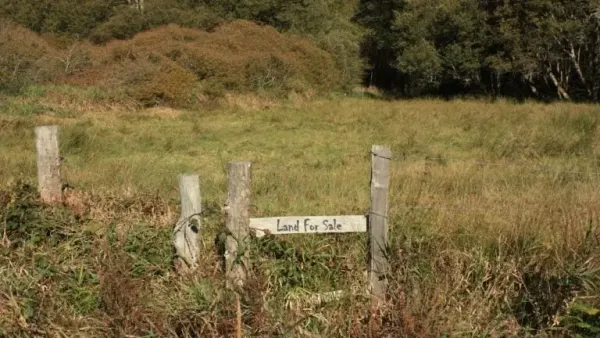
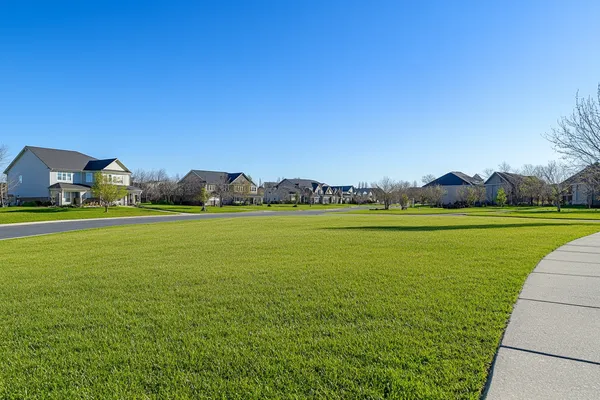
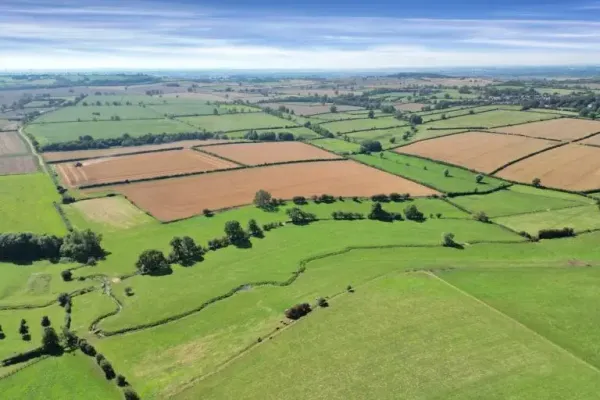
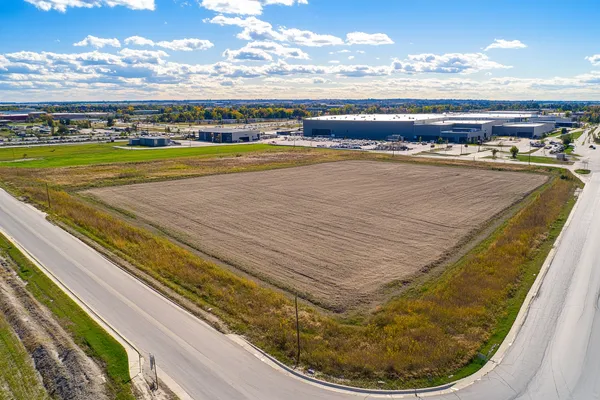
Any Size, Any Condition
We Buy All Types of Land
-
Vacant / Undeveloped
-
Residential / Suburban
-
Farmland / Agricultural
-
Commercial / Industrial
Arkansas Land Resources
Related Guides for Arkansas Landowners
Cash Sale vs. Agent vs. FSBO
Three Ways to Sell Arkansas Land — and What Each Costs You
Rural land moves slowly next to houses, and that gap is where the real cost of the wrong sale method shows up. A traditional listing with a real estate agent can sit for six to twelve months on a vacant Ozark or Delta tract, and the 5 to 10 percent commission — plus the closing costs sellers typically cover — comes straight out of the proceeds. Selling it yourself saves the commission but hands you the entire job: pricing a parcel with few nearby comparable sales, vetting buyers who never make it to the closing table, and coordinating an abstract title search and transfer-tax calculation with a local Arkansas title company on your own, often from out of state.
Selling to us trades top-dollar-someday for certainty now: a written cash offer in 24 hours, no commission, no repairs or showings, closing costs on us, and a clear-title parcel that can close in as little as 14 days through remote e-notary signing. We also absorb the parts that stall a listing or FSBO sale — back taxes owed to the county collector, an unresolved small-estate affidavit, or a fractional interest under Arkansas's Uniform Partition of Heirs Property Act. It is not the right call for every parcel; land with real development upside and time to wait can do better listed. But for an idle, inherited, or tax-burdened Arkansas tract, the math usually favors the clean exit. The table below lines up all three.
See the Difference
Why Sell to Us?
| Real Estate Agent | For Sale by Owner | Perspective Properties | |
|---|---|---|---|
| Commissions / Fees | 5–10% | Varies | None |
| Closing Costs | You Pay | You Pay | We Pay |
| Timeline | 6–12 months | Unknown | As Little as 14 Days |
| Showings / Inspections | Multiple | You Handle | None |
| Repairs Required | Often | Often | Never |
| Certainty of Sale | Low | Very Low | High |
Who You're Working With
About Perspective Properties
Perspective Properties LLC is led by managing partner Christian Smith, who founded the company on a straightforward idea: selling land should be easy for the people who no longer want or need it. We have spent more than a decade buying rural land and have worked with hundreds of landowners across the nine states we serve, Arkansas among them — from the Ozark foothills to the Delta bottoms.
Every offer we make is a real cash offer, backed by our own funds, with no financing contingency and no assignment games. We pay the closing costs, we charge no commissions, and the number we put in writing is the number you receive. When a parcel has a complication we cannot solve on our own — a genuinely contested title, an estate that needs a lawyer — we say so and point you toward the right professional. Straight answers are the entire point.
Common Questions From Arkansas Sellers
Arkansas Land Selling FAQ
Do I need a real estate license to sell my land in Arkansas?
Arkansas owner-sellers typically don't need a license to sell their own land — though state exemptions vary case-by-case, so consult an Arkansas-licensed attorney if your situation is complex. Direct owner sales are routine across Arkansas, and we handle title and closing through your local Arkansas title company. You sign the deed; the title company handles recording with the county and disbursement of funds. If your situation is more complex — multiple heirs in multiple states, partial ownership, contested title, or an estate that has not been through probate — we will tell you what we are seeing and recommend you consult an Arkansas-licensed attorney before signing.
How long does closing typically take in Arkansas?
Plan on 14 to 21 days from accepted offer to wire for most Arkansas closings. Title search is the main variable: Arkansas title companies run abstract searches county-by-county, and a clean abstract from a long-time owner closes in two weeks. Where things slow down is multi-generational deeds with gaps in the chain of ownership — the county collector's records and a title cure through the court system can push a timeline longer. Arkansas closings run electronically as a standard practice — e-signatures and a traveling notary at your home cover the seller side without requiring travel.
Do you buy land with back taxes owed in Arkansas?
Back taxes are not a barrier to selling in Arkansas. When a parcel goes delinquent long enough, the Arkansas Commissioner of State Lands enters the picture — and the clock on a tax-deed sale starts running. Our team works with your local Arkansas title company and the county tax collector to calculate the payoff, settle the balance at closing, and net it against sale proceeds. In most cases, you don't pay out of pocket; if back taxes exceed your offer, our team walks you through the options before closing. If a Commissioner of State Lands auction date has already been scheduled, contact us and an Arkansas-licensed attorney immediately — timing is jurisdiction- and case-specific. Tell us upfront if taxes are owed so we build it into the offer cleanly.
Can I sell my Arkansas land from out of state?
Yes. Out-of-state Arkansas closings happen weekly here. The Ozark plateau and Delta counties have deep absentee-owner profiles — descendants who left for Dallas, Memphis, or Atlanta generations ago, and Faulkner or Garland County owners who simply moved on and never sold. We close electronically: your Arkansas title company handles the deed recording, a notary visit at your kitchen table covers the signing, and funds wire on closing day.
What is the typical offer range for Arkansas rural land?
Offers vary by acreage, county, access, and parcel features. Arkansas pricing varies sharply across regions — a Saline County Little Rock-suburban parcel prices differently from a Hot Springs / Garland County recreational tract or an Ozark-foothill or Delta parcel. Submit your parcel — we'll send a specific written offer in as little as 24 hours.
Will I owe capital gains tax when I sell my Arkansas land?
Possibly, but Arkansas is friendlier here than most states. Arkansas excludes 50 percent of net long-term capital gains from state income tax under A.C.A. § 26-51-815, which drops the effective state rate on a qualifying long-term gain to roughly 2.2 percent at the top 4.4 percent bracket. Federal capital gains rules still apply on top — long-term gains on land held more than a year are taxed at 0, 15, or 20 percent depending on your income. Your taxable gain depends on your basis, which for inherited land is usually the stepped-up value at the date of death. We are land buyers, not tax advisors, so run your specific numbers past an accountant — but we hand every seller a clean closing statement to work from.
How does selling work if several heirs own the Arkansas land together?
It is common and workable. Land that passed down without a formal estate often ends up owned by several relatives holding undivided fractional interests. Arkansas adopted the Uniform Partition of Heirs Property Act in 2015 (A.C.A. § 18-60-1001 et seq.), which adds a right of first refusal and a court-ordered appraisal before any forced sale. We can buy a single heir's fractional interest or coordinate all of the owners toward one clean closing, and your local Arkansas title company confirms every signature the deed requires. If the ownership is spread across several names and states, tell us up front — it changes the paperwork, not our interest in buying.
What Our Clients Say
Trusted by Landowners
"Christian was awesome to work with. Super professional, easy to communicate with, you can tell he genuinely cares about what he does and about his clients. Highly recommend."
"We closed a transaction with Christian Smith — he is very knowledgeable and goes beyond his job to take care of his clients in a timely manner."
"This was a simple process and Christian was a pleasure to work with. He took care of anything that came up without hesitation and made the whole experience a breeze. I would highly recommend Perspective Properties if you're looking to buy or sell properties."