

Sell Your Michigan Land for Cash — Fast, Fair Offers
From the Thumb farm country of Lapeer to the Blue Water shoreline at Port Huron and the Detroit-metro exurban acreage along I-69 and I-94 — we make written cash offers on rural Michigan land in as little as 24 hours. No agents. No fees. No drawn-out listings. Tell us your county and acreage and we'll send a specific written offer.
All 83 counties · any condition · cash
- No fees
- Any condition
- Offer in 24 hours
Own land in Michigan?
Get a cash offer in 24 hours.
- 83 counties covered
- 21–30 days to close, typical
- $0 fees or closing costs to you
- 24 hrs to a real offer
The land we buy here
- Northern hardwoods
- Sandy jack pine
- Two-track hunting land
- Lake-area vacant lot
- Inherited & overgrown
The counties we buy in across Michigan
The Perspective Properties Advantage
Why Choose Us
-

Fair Cash Offers
We research every property thoroughly to ensure you receive a competitive, market-based offer.
-

Fast Closings
Close in as little as 14 days. Faster on clear-title parcels — and we work to your timeline if you need longer.
-

Zero Commissions
No agent fees, no commissions, no hidden costs. The offer we make is the amount you receive.
-

Flexible Closings
Choose the closing date that works for your schedule. We work around your timeline, not ours.
Simple 3-Step Process
How It Works
-

Request Your Cash Offer
Fill out our quick form or give us a call. Tell us about your property and we'll start reviewing it right away.
-

Receive a No-Obligation Offer
We'll research your property and present you with a fair, no-obligation cash offer in as little as 24 hours.
-

Close on Your Terms
Pick your closing date. We handle all the paperwork, cover all closing costs, and pay you cash at closing.
Michigan Land Context
Michigan Land: Thumb Country, Great Lakes Shoreline, and Detroit-Metro Exurbs
Michigan land in the area we work falls into three overlapping characters. The Thumb agricultural belt — Lapeer at its western edge, running east through Sanilac and Huron counties toward the lake — has been Michigan farming country for generations. Row-crop and pasture land here has steadily attracted Detroit-metro commuters looking for rural-residential parcels within a reasonable drive of the I-69 and I-94 corridors. In Lapeer, Lake Nepessing and the Lapeer State Game Area give the county a recreational identity alongside its agricultural one; Imlay City sits at the northern edge.
Further east, St. Clair County runs from Port Huron and the Blue Water Bridge crossing into Sarnia, Ontario, down through the St. Clair Flats — one of the largest freshwater deltas in North America, anchored by Algonac — to the Pine River and Great Lakes shoreline. This is both a working Great Lakes county and a recreational one, drawing weekend buyers from the Detroit metro and from across the border. Absentee ownership is common throughout both counties: Detroit-metro retirees in Florida or Arizona, weekend-cabin heirs in Ohio or Indiana, Thumb-region farmland inheritors who left for the city a generation ago.
We buy across this mix — farmland, recreational tracts, hunting acreage, lake-adjacent parcels, and rural residential land in any condition. Whether you have a few acres or a larger family holding, submit your parcel and we'll send a specific written offer. Every offer is built around your county, parcel, and circumstances — not a formula.
Common Michigan Seller Profiles
Who We Buy From in Michigan
-
Thumb-region farmland heirs
Inherited a row-crop or pasture tract in Lapeer or eastern St. Clair that came down through a multi-generation Michigan farming family. Current heirs work non-farm jobs, the land is cash-rented or fallow, and a clean cash sale beats another cycle of lease negotiations.
-
Detroit-metro commuter-land sellers
Owners who bought rural acreage along I-69 or I-94 planning to build a weekend place or future retirement home, then changed plans. The Michigan parcel sits idle, the tax bill arrives every winter, and selling makes more sense than holding.
-
Hunting-camp heirs in St. Clair and Lapeer
Inherited recreational tracts — deer camps, duck blinds, and family hunting parcels — from a parent or uncle who passed. The next generation does not hunt, the camp has not been used in three or more seasons, and the annual taxes plus insurance no longer make sense.
-
Out-of-state descendants of Michigan landowners
Children and grandchildren of Michigan farmers and tradesmen who left for Florida, Arizona, or the Sun Belt decades ago. The Michigan parcel is hours and a flight away, rarely visited, and easier to sell remotely than to lease or list.
-
Snowbird relocators downsizing rural acreage
Retirees who held a Michigan property as a summer base while wintering south, and have decided to consolidate. The Michigan parcel is the asset to liquidate, and a fast remote close fits the plan.
These are common situations — not the only ones. If you own land in Michigan and want a cash offer, submit your parcel below.
Michigan Land Market
Michigan Land Values and Regional Pricing
Michigan farm real estate averaged $6,310 per acre in 2024 — with cropland at $5,870 per acre and pasture at $2,970 per acre, per USDA NASS August 2024 data. In 2025 those figures jumped, and the increase was the largest in the country: Michigan farm real estate rose 7.8 percent to $6,800 per acre — the top gain of any state — while cropland climbed 8.2 percent to roughly $6,350 per acre and pasture rose 4.4 percent to $3,100 per acre, per the USDA NASS 2025 Land Values summary. National cropland averaged $5,830 that year, so Michigan cropland now sits well above the U.S. mean and is appreciating faster than it. The Thumb counties — Lapeer, St. Clair, Sanilac, Huron, and Tuscola — concentrate the state's most actively traded row-crop and pasture acreage. Lapeer County's 1,050 farms average 155 acres, with 84 percent of operations under 180 acres, meaning typical Lapeer parcels sit below the state cropland benchmark. St. Clair County's 149,465 cropland acres represent 87.8 percent of land in farms — a higher concentration than Lapeer's 75.5 percent — placing St. Clair parcels with active corn-and-soy rotation closer to the state cropland average. Michigan's combined transfer tax runs approximately $860 on a $100,000 parcel: the state SRETT at $3.75 per $500 (MCL § 207.525) plus the county CRETT at $0.55 per $500 (MCL § 207.504).
Michigan's Uniform Partition of Heirs Property Act (MCL § 600.3401 et seq.) took effect April 2, 2025 under Public Act 215 of 2024. Under this framework, any co-owner seeking partition must give remaining co-owners notice and a right of first refusal at an independently appraised value; courts must also weigh physical division before ordering a forced sale. For Thumb-region families where farmland passed to multiple heirs — a common pattern across Lapeer, Sanilac, and Huron counties — the UPHPA creates a formal path for heirs who want to retain the land to buy out those who want cash, at a court-certified fair price. Michigan's flat $30 recording fee per document (MCL § 600.2567) and high statewide e-recording adoption through Simplifile, CSC, and ePN mean Thumb-region closings typically clear title search, deed preparation, and county register recording within five to ten business days once all required signatures are in hand.
Statewide value is only the starting point; the real number lives at the parcel. Michigan has 83 counties, and land in each is assessed locally — a county assessor sets a State Equalized Value at roughly 50 percent of market value, and county-to-county cash rents range widely, which Michigan State University Extension tracks by county alongside its long-running farmland value survey. That local variation is why we price off your specific parcel — county, road frontage, soil class, drainage, and current use — rather than applying a single per-acre figure across the state. Two forty-acre tracts an hour apart in the Thumb can carry meaningfully different offers, and the written number we send reflects the one you actually own.
Michigan Land Law, Taxes & Closing
What Michigan Law Actually Requires When You Sell Land
Most cash-buyer pages skip the law entirely. We take the opposite view, because the questions that actually stall a Michigan land sale are legal ones: an estate that never closed, a deed that lists four siblings, a severed mineral interest nobody remembered. Here is how the rules governing those situations actually read, with the Michigan Compiled Laws sections so you can check them yourself. None of this is legal advice — for your specific parcel, talk to a Michigan-licensed attorney — but knowing the framework tells you which of these apply before you ever see an offer.
Probate and inherited land
Michigan settles estates under the Estates and Protected Individuals Code, or EPIC, codified at MCL § 700.1101 et seq. When someone dies owning land and the estate is small, the summary process under MCL § 700.3982 lets a court order the property distributed without full administration. The threshold is a $50,000 gross estate, reduced by funeral and burial costs, and it is adjusted for inflation every year under MCL § 700.1210. For a modest inherited parcel with clear title, that summary route can produce a signable order in a matter of weeks.
Bigger or formally administered estates run longer, and the reason is the creditor window. MCL § 700.3801 gives estate creditors four months from the first published notice to bring claims, so an unsupervised administration rarely wraps in under five months even when everyone cooperates. If there was no will, MCL § 700.2101 sets who inherits and in what shares. Michigan's probate courts run county by county — the state judiciary keeps the directory, and public-access versions of the code are posted at Justia. We do not need probate finished to start; we do need to know where it stands, because whoever signs the deed has to be the person the court has actually authorized to convey.
When land has more than one owner: Michigan's new heirs' property law
Land that passes to several heirs without a will often ends up as a tenancy in common — each heir owns an undivided share, and any one of them can historically force a sale of the whole. Michigan shifted that balance recently. The state adopted the Uniform Partition of Heirs Property Act through Public Act 215 of 2024, effective April 2, 2025, now codified at MCL § 600.3401 et seq. This is genuinely new law, and almost no competing land buyer even mentions it.
Under the heirs'-property framework, a co-owner who wants out must give the others notice and a right to buy the share at an independently appraised value before any forced sale, and a court has to weigh dividing the land physically before ordering it sold. The general partition statute, MCL § 600.3304, still governs where the newer act does not reach. For a Thumb-region family where 200 acres came down to five cousins, this matters in a concrete way: the cousins who want cash can sell their shares to us cleanly, while the ones who want to keep farming get the statutory first chance to buy them out. We regularly buy a fractional interest and let the family sort the rest on their own timeline.
Transfer taxes, recording, and how Michigan title clears
Michigan is a race-notice state. MCL § 565.29 makes an unrecorded conveyance void against a later good-faith buyer who records first, which is why getting the deed to the county register of deeds promptly is not a formality — it is what protects the sale. The recording requirements themselves live in MCL § 565.201, and the fee is refreshingly simple: a flat $30 per document regardless of page count, under MCL § 600.2567.
Transfer tax is where sellers get surprised, so here are the real rates. The state transfer tax is $3.75 per $500 of price — effectively 0.75 percent — under MCL § 207.525, and the seller is the party liable for it. Counties add their own tax at $0.55 per $500, and Wayne County, above two million residents, can go to $0.75, under MCL § 207.504. On a $100,000 parcel that is about $750 to the state and $110 to the county, roughly $860 in all. When we make an offer, we account for the transfer tax and recording costs up front, so the figure you sign is the figure that clears — not a headline number that shrinks at the closing table.
Income tax, mineral rights, and the farmland exemptions
A land sale creates taxable gain. Michigan taxes it as ordinary income at the flat 4.25 percent individual rate for 2026, per the Michigan Department of Treasury, and the federal side follows the standard split the IRS lays out: short-term gain taxed as ordinary income, long-term gain held more than a year taxed at 0, 15, or 20 percent by bracket. One trap worth naming — the Principal Residence Exemption at MCL § 211.7cc does not apply to vacant land, so raw acreage carries the full non-homestead millage and gets no homestead break on sale.
Two more Michigan-specific items shape offers on rural ground. Mineral rights come first: under the Dormant Mineral Act, MCL § 554.291, a severed oil-or-gas interest that sits unused for 20 years reverts to the surface owner, so old severances on Thumb and northern parcels have frequently lapsed — though title still has to confirm it. Farmland tax status comes second: property enrolled as Qualified Agricultural Property under MCL § 211.7ee, or under a PA 116 farmland preservation agreement, carries school-operating exemptions and sometimes a recapture obligation when the land converts or sells — MSU Extension walks through the PA 116 side. We check for these before writing the offer, so nothing surprises you after you have signed.
Michigan Counties in Detail
A Closer Look at Michigan Land, County by County
St. Clair County (Eastern Michigan / Port Huron)
Port Huron anchors the county with the Blue Water Bridge crossing into Sarnia, Ontario. The St. Clair Flats freshwater delta — one of the largest in North America, centered on Algonac — runs south along the lake. The Pine River and Great Lakes shoreline attract both recreational and residential buyers. Common sellers: hunting-camp heirs, Great Lakes shoreline absentee owners, and commuter-land downsizers.
Lapeer County (Thumb-Adjacent / Detroit Exurb)
Lapeer sits at the Thumb-adjacent edge of southeast Michigan, with Lake Nepessing and the Lapeer State Game Area giving the county its recreational identity. Imlay City sits to the north. Detroit-metro commuter pressure along I-69 has pushed exurban demand steadily into the county. Common sellers: Thumb farmland heirs and out-of-state descendants of Lapeer farming families.
We buy land in all 83 Michigan counties, including the Thumb counties of Sanilac (Sanilac Petroglyphs, Port Sanilac lighthouse), Huron (Port Austin, Grindstone City), and Tuscola (Cass City, Vassar). Submit any Michigan parcel for a written offer in as little as 24 hours.
Every Michigan County We Buy In
Michigan Land by Region — From the Thumb to the Upper Peninsula
Michigan is not one land market — it is at least five, and the offer logic changes as you move from row-crop country in the south, to the sand-and-pine recreation belt up north, to the remote timber tracts of the Upper Peninsula. We buy in all 83 counties. Here is how the state breaks down, with every county listed by region so you can find yours.
The Thumb and Southeast Michigan
The southeast corner holds most of Michigan's population and its heaviest development pressure. It also holds the Thumb — Huron, Sanilac, Tuscola, and Lapeer — some of the most productive and actively traded farmland in the state, sitting a manageable drive from Detroit-metro buyers along the I-69 and I-94 corridors. Recreational demand runs right alongside the ag market here: deer camps, duck ground near the lake, and rural-residential parcels bought years ago for a build that never happened.
We buy across all of it. This region covers Wayne, Oakland, Macomb, Genesee, Livingston, Washtenaw, Monroe, Lapeer, St. Clair, Sanilac, Huron, Tuscola, Lenawee, Jackson, Hillsdale, Branch, and Calhoun.
West Michigan and the Lakeshore
West Michigan pairs the Grand Rapids and Kalamazoo growth corridors with a fruit-belt lakeshore that runs south to the Indiana line. Ottawa and Kent rank among the fastest-growing counties in the state, which pushes exurban and rural-residential demand outward into Allegan, Barry, and Montcalm. Closer to Lake Michigan, orchard and specialty-crop ground in Berrien, Van Buren, and Oceana trades on very different fundamentals than the open corn-and-soy acreage inland.
Counties in this region: Kent, Ottawa, Allegan, Barry, Berrien, Cass, Kalamazoo, Van Buren, St. Joseph, Muskegon, Newaygo, Oceana, Mecosta, and Montcalm.
Mid-Michigan and the Saginaw Valley
The state's midsection combines the capital region around Lansing with the Saginaw Valley's flat, dark, high-yield cropland — some of the best row-crop dirt in Michigan. Ingham, Clinton, and Eaton feel the Lansing commuter market; Saginaw, Bay, and Midland anchor the Tri-Cities. Isabella and Gratiot sit in the agricultural heart of the state, where 80- and 160-acre tracts change hands on a regular basis.
Counties in this region: Ingham, Clinton, Eaton, Saginaw, Bay, Midland, Isabella, Gratiot, Ionia, and Shiawassee.
The Northern Lower Peninsula
North of the Bay City to Muskegon line, the land turns to sand, pine, hardwood, and lake frontage. This is Michigan's recreation country — the Grand Traverse and Leelanau wine-and-orchard region, the Gaylord and Grayling forest belt, and the Sunrise Coast along Lake Huron. Parcels here are often hunting camps, cabin lots, and inherited acreage held by families who moved downstate a generation ago, which makes remote, absentee sales the norm rather than the exception.
Counties in this region: Grand Traverse, Leelanau, Benzie, Antrim, Charlevoix, Emmet, Cheboygan, Otsego, Crawford, Kalkaska, Missaukee, Wexford, Manistee, Mason, Lake, Osceola, Clare, Gladwin, Arenac, Iosco, Ogemaw, Roscommon, Oscoda, Alcona, Alpena, Montmorency, and Presque Isle.
The Upper Peninsula
The U.P. is a land market of its own: 15 counties, enormous timber and former mining ground, and long stretches of Lake Superior and Lake Michigan shoreline. Values per acre run lower than downstate cropland, but tracts run large, and much of the ownership is absentee — heirs and out-of-state investors holding recreational or timber parcels they rarely visit. We buy remote and forested ground up here that a lot of downstate buyers will not touch.
Counties in this region: Marquette, Chippewa, Delta, Dickinson, Houghton, Menominee, Mackinac, Gogebic, Schoolcraft, Alger, Baraga, Iron, Ontonagon, Luce, and Keweenaw.
No individual county page? That is fine — we do not require one. Send any Michigan parcel, in any of these 83 counties, and we will price it directly from the county, the acreage, and the parcel details you give us.
What This Usually Looks Like
A Typical Situation We See in Michigan
Here is a pattern that reaches our desk most months, described in general terms because every parcel is its own case. A parent who farmed 120 acres in the Thumb — Sanilac or Huron, say — passes away, and the land goes to three adult children. One still lives in Michigan; the others moved to Florida and Arizona years ago. The ground is cash-rented to a neighbor for a modest figure, the winter tax bill still arrives, and nobody wants to manage a lease from a thousand miles off. The estate went through informal probate, but the deed was never cleaned up, so title still reads in the parent's name.
When a family like this reaches out, our first job is to work out who actually has authority to sign. If probate closed, we identify the heirs and the instrument that vested title; if it did not, we point the family toward the summary or informal process that fits and coordinate with a local Michigan title company from the start. We order a title search, confirm there are no surprise liens or old severed mineral interests, and calculate the exact transfer tax and recording cost so the net is clear before anyone commits. Because the parcel is agricultural with clean road access, none of this requires the heirs to travel — signing happens by e-signature and a mobile notary near each of them.
From accepted offer to funded closing, a case like this generally runs two to three weeks once the signing authority is settled. The heirs split the proceeds by their shares, the lease obligation ends, and the recurring tax bill goes away. We do not invent details or promise a number before we have looked at the parcel — but this shape of transaction, inherited Thumb farmland with out-of-state heirs, is one we handle routinely, and the written offer reflects exactly what we can pay for that specific ground.
Got a Thumb-region tract or Detroit-metro acreage sitting idle?
We'll have a written cash offer to you in as little as 24 hours.
Any Size, Any Condition
We Buy All Types of Land
-
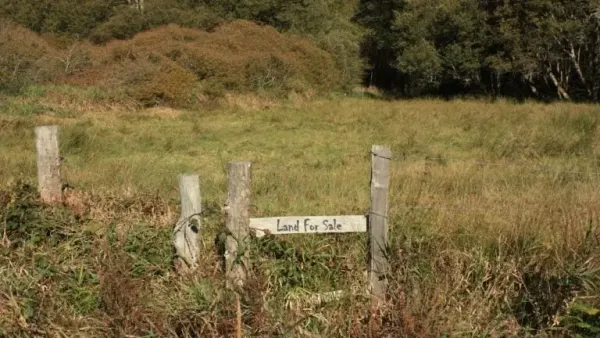
Vacant / Undeveloped
-
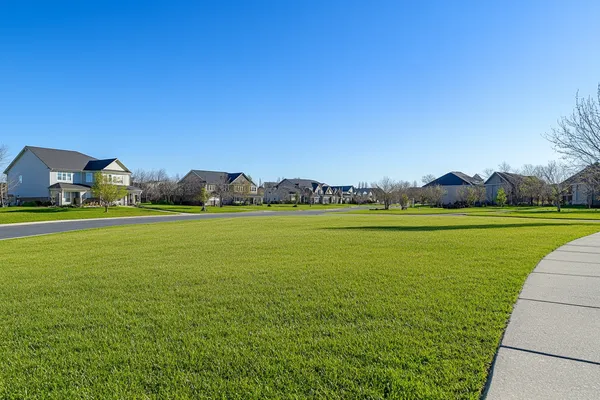
Residential / Suburban
-
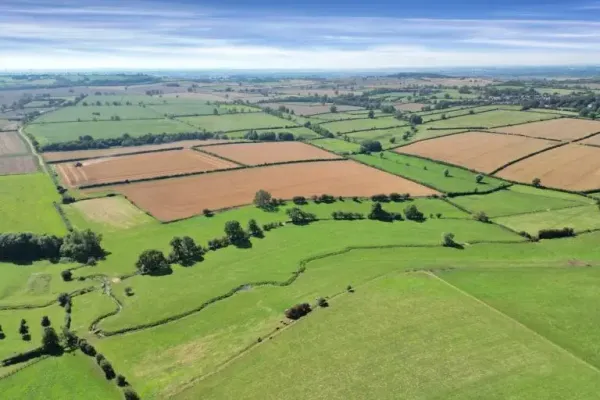
Farmland / Agricultural
-
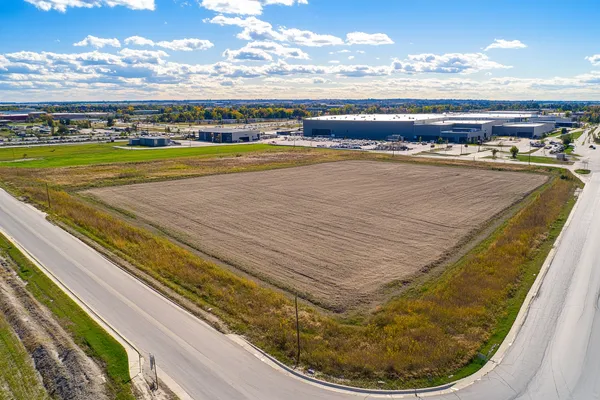
Commercial / Industrial
Michigan Land Resources
Related Guides for Michigan Landowners
- Michigan Land Values 2026 — Lapeer County vs. the State Average →
- Michigan's Land Division Act — New 4→10 Parcel Split Rules →
- Heir Property Laws by State — Who Can Force a Land Sale →
- Michigan Uncapping — Which Inherited Parcels Keep the Tax Cap →
- USDA Land Values 2026 — Record Highs Across All Nine States →
Cash Sale vs. Agent vs. FSBO
Three Ways to Sell Michigan Land — and What Each Costs You
Vacant land sells differently than a house, and the two traditional routes both carry real friction in Michigan. Listing raw acreage with an agent means 5 to 10 percent in commission, months on market — a listed land sale routinely runs six months to a year — and a buyer who usually needs financing, which for undeveloped land is harder to get and slower to close. Selling it yourself avoids the commission, but it puts the marketing, the buyer vetting, the purchase agreement, and the title-company coordination on you, and land buyers are a thin, scattered pool to reach.
A direct cash sale trades top-of-market price for speed and certainty. We pay no commission because there is no agent, we cover closing costs, we buy as-is with no survey-and-repair back-and-forth, and we close on clear title in as little as 14 days. The table below sets the three paths side by side. The right choice depends on your situation — if you have time and a marketable, buildable lot in a hot county, a listing may net more; if you want the parcel gone cleanly and soon, a cash sale is what we do.
See the Difference
Why Sell to Us?
| Real Estate Agent | For Sale by Owner | Perspective Properties | |
|---|---|---|---|
| Commissions / Fees | 5–10% | Varies | None |
| Closing Costs | You Pay | You Pay | We Pay |
| Timeline | 6–12 months | Unknown | As Little as 14 Days |
| Showings / Inspections | Multiple | You Handle | None |
| Repairs Required | Often | Often | Never |
| Certainty of Sale | Low | Very Low | High |
Who You're Working With
About Perspective Properties
Perspective Properties LLC is a direct land-buying company founded by Christian Smith, its Managing Partner, who has spent years investing in real estate. We started the company for one reason: to make selling land straightforward for owners who would rather have a clean cash sale than a drawn-out listing. We buy across nine states, we buy with our own funds, and we are the principal in the transaction — not an agent shopping your parcel around to someone else.
On the Michigan side, that means we work through your local Michigan title company for the search, the deed, and the disbursement, so the closing runs through a licensed, neutral third party rather than a handshake. We make written, no-obligation offers, we cover closing costs, and we charge no commissions or fees — the figure we put in writing is the figure you are paid at closing. If your parcel has a wrinkle we cannot solve cleanly, we say so plainly instead of tying up your land under contract while we figure it out.
Common Questions From Michigan Sellers
Michigan Land Selling FAQ
Do I need a real estate license to sell my land in Michigan?
Michigan owner-sellers usually aren't required to be licensed for the sale of their own land — but exemption rules can shift by transaction type, so check with a Michigan-licensed attorney before signing if you have any doubt. Direct owner sales are routine across Michigan, and we handle title and closing through your local Michigan title company. You sign the deed; the title company handles recording with the county register of deeds and disbursement of funds. If your situation is more complex — multiple heirs across states, partial ownership, contested title, or an estate not yet through probate — we will tell you what we are seeing and recommend you consult a Michigan-licensed attorney before signing.
How long does closing typically take in Michigan?
Michigan closings typically land in the 14-to-21-day window from accepted offer to wire. The county register of deeds records the deed and the title company handles the search and commitment — for clear Thumb farmland with a long chain of ownership, two weeks is achievable. What stretches the timeline is multi-generational family holdings with undocumented ownership transfers, or open probate where the personal representative has not yet been appointed. Winter conditions in the Thumb can occasionally slow a survey, but most closings still land in the 14-to-21-day window. Most Michigan transactions close electronically — e-signature plus a notary near you handles your end without travel.
Do you buy land with back taxes owed in Michigan?
Yes, and Michigan's tax-forfeiture process is worth understanding before you wait too long. Michigan runs a two-step system: the county treasurer forfeits a delinquent parcel after two years of unpaid taxes, then judgment and foreclosure follow the next year. Our team works with your local Michigan title company and the county treasurer's office to calculate the payoff, settle back taxes at closing, and net the amount against sale proceeds. In most cases, you don't pay out of pocket; if back taxes exceed your offer, our team walks you through the options before closing. If a forfeiture notice has already been entered, contact us and a Michigan-licensed attorney immediately — timing is jurisdiction- and case-specific. Tell us upfront if taxes are owed so we build it into the offer cleanly.
Can I sell my Michigan land from out of state?
Absolutely. Snowbird-Florida and Sun-Belt-relocated Michigan landowners close remotely all the time. Out-of-state Michigan closings are routine — Detroit-metro retirees in Florida and Arizona, weekend-cabin heirs in Ohio or Indiana, Thumb-region farmland inheritors. We close electronically: your Michigan title company handles the register-of-deeds recording, your local notary public near you witnesses the signing, and funds wire the same day as closing.
What is the typical offer range for Michigan rural land?
Offers vary by county, acreage, road access, and parcel features. Michigan pricing varies — a Port Huron / St. Clair Flats waterfront parcel prices differently from a Lapeer agricultural tract or Thumb hunting acreage. Submit your parcel — we'll send a specific written offer in as little as 24 hours.
I inherited Michigan land — do I have to finish probate before I sell?
Often, but not always. Michigan probate runs under the Estates and Protected Individuals Code (MCL § 700.1101 et seq.). If the whole estate is modest, the small-estate summary process under MCL § 700.3982 — a $50,000 gross-estate threshold that is adjusted for inflation each year under MCL § 700.1210 — can move a clean parcel through in weeks rather than months. Larger or formally administered estates run longer, mostly because of the four-month creditor-claim window in MCL § 700.3801. We work with your local Michigan title company and, where the situation calls for it, a Michigan probate attorney, so the deed gets signed by whoever actually holds authority to convey. Tell us where the estate stands when you reach out and we build the timeline around it.
What taxes come out of a Michigan land sale?
Two main ones. Michigan's State Real Estate Transfer Tax runs $3.75 per $500 of price under MCL § 207.525, and most counties add $0.55 per $500 under MCL § 207.504 — roughly $860 on a $100,000 sale, with the seller as the party liable under the state act. Separately, any gain is income: Michigan taxes it at the flat 4.25 percent individual rate, and the IRS taxes long-term gains at 0, 15, or 20 percent depending on your bracket. Vacant land does not qualify for the Principal Residence Exemption under MCL § 211.7cc, so do not assume a homestead break applies to raw acreage. None of this is tax advice — confirm your specific figures with a Michigan CPA — but we fold known transfer taxes and recording costs into a clean net number, so the offer you see reflects what actually reaches you.
What Our Clients Say
Trusted by Landowners
"Christian was awesome to work with. Super professional, easy to communicate with, you can tell he genuinely cares about what he does and about his clients. Highly recommend."
"We closed a transaction with Christian Smith — he is very knowledgeable and goes beyond his job to take care of his clients in a timely manner."
"This was a simple process and Christian was a pleasure to work with. He took care of anything that came up without hesitation and made the whole experience a breeze. I would highly recommend Perspective Properties if you're looking to buy or sell properties."