

Sell Your Georgia Land for Cash — Fast, Fair Offers
From the Bulloch County rural belt along the Ogeechee River to the timber tracts and family farms across South Georgia — we make written cash offers on Georgia land in as little as 24 hours. No agents. No fees. No drawn-out listings. Send us your parcel details and we'll come back with a written cash offer fast.
All 159 counties · any condition · cash
- No fees
- Any condition
- Offer in 24 hours
Own land in Georgia?
Get a cash offer in 24 hours.
- 159 counties covered
- 21–30 days to close, typical
- $0 fees or closing costs to you
- 24 hrs to a real offer
The land we buy here
- Planted pine
- Red-clay pasture
- Branch bottom
- Cutover timber
- Inherited & overgrown
The counties we buy in across Georgia
The Perspective Properties Advantage
Why Choose Us
-

Fair Cash Offers
We research every property thoroughly to ensure you receive a competitive, market-based offer.
-

Fast Closings
Close in as little as 14 days. Faster on clear-title parcels — and we work to your timeline if you need longer.
-

Zero Commissions
No agent fees, no commissions, no hidden costs. The offer we make is the amount you receive.
-

Flexible Closings
Choose the closing date that works for your schedule. We work around your timeline, not ours.
Simple 3-Step Process
How It Works
-

Request Your Cash Offer
Fill out our quick form or give us a call. Tell us about your property and we'll start reviewing it right away.
-

Receive a No-Obligation Offer
We'll research your property and present you with a fair, no-obligation cash offer in as little as 24 hours.
-

Close on Your Terms
Pick your closing date. We handle all the paperwork, cover all closing costs, and pay you cash at closing.
Georgia Land Context
Georgia Land: Bulloch and South Georgia's Farms, Timber Tracts, and River Corridors
Bulloch County is our primary Georgia focus, and Statesboro is the county seat — a South Georgia city anchored by Georgia Southern University, the dominant student, faculty, and staff demand pool for residential and small-acreage land in the surrounding area. The Eagles athletic identity and the university's presence have shaped Statesboro into a regional hub for the surrounding South Georgia counties. The Ogeechee River and Canoochee River corridors run through Bulloch's rural character, creating river-adjacent and river-frontage pockets that carry a distinct premium. Outside those corridors, Bulloch is agricultural South Georgia: row crop and pasture acreage, pine and mixed timber tracts, and family-farm heritage that has been transitioning into small-acreage residential as the area's growth pulls outward from the university core.
South Georgia's surrounding counties add depth and seller variety. Effingham County (Springfield) sits in Savannah's exurban growth ring. Bryan County (Richmond Hill) is one of Georgia's fastest-growing counties, anchored by Fort Stewart Army base activity. Evans County (Claxton) carries regional identity as the "Fruitcake Capital of the World" through Claxton Bakery's century-old operation — a small-town agricultural community with timber and farmland heritage. Tattnall County (Reidsville) sits adjacent to the famous Vidalia onion growing country. Screven County (Sylvania) runs agricultural and timber land along the Savannah River. Candler County (Metter) and Emanuel County (Swainsboro) extend the Pine Belt timber character of the region.
Across all of South Georgia, a familiar seller pattern repeats: land that has been in a family for generations — often row crop, pasture, or timber — held by heirs who moved to Atlanta, Savannah, Jacksonville, or further afield and never came back. Tax bills accumulate. The parcel sits idle. Selling to a cash buyer beats coordinating a listing across scattered heirs or managing a tract from out of state. Whatever size parcel you're holding in Bulloch or the surrounding South Georgia counties, submit it — we make written cash offers on Georgia land of any size in as little as 24 hours.
Common Georgia Seller Profiles
Who We Buy From in Georgia
-
Rural farmland heirs in Bulloch and surrounding South Georgia counties
A family parcel — often row crop, pasture, or mixed-use acreage — that passed through two or three generations of South Georgia farming families. Current heirs have full-time jobs in Atlanta or Savannah and no interest in driving back to Statesboro to manage taxes, fence, and brush.
-
Georgia Southern University-area divestors
Owners of small parcels near Statesboro that a family held for a future home, rental, or student-area investment but no longer wants to manage. Rather than deal with rezoning or developer negotiations, they prefer a clean cash exit.
-
Owners of timber or farm tracts that no longer fit the family's plans
Owners of inherited Georgia pine, hardwood, or mixed timber tracts in the Bulloch corridor — often not cruised or harvested in a decade. Heirs are scattered, the rotation math no longer pencils, and a clean cash sale beats a crash course in timber economics.
-
Retirees downsizing rural Georgia acreage
Owners who bought 40 acres in Bulloch or a neighboring South Georgia county fifteen or twenty years ago intending to retire on it, then changed plans. The Georgia parcel sits idle; the annual county tax bill keeps arriving; we close remotely.
-
Multi-generation Bulloch families with parcels scattered across heirs
Long-tenure Bulloch and South Georgia families whose original tract was divided across cousins, in-laws, and out-of-state grandchildren. Coordinating a traditional listing across the heir group is hard; a single written cash offer that closes through one Georgia closing attorney is simpler.
These are common situations — not the only ones. If you own land in Georgia and want a cash offer, submit your parcel below.
Georgia Land Market Data
Georgia Land: The Numbers That Shape an Offer
159 counties, more than any state but Texas
Recording, transfer-tax filing, and deed handling all happen at the county level, so the county your parcel sits in shapes exactly how the closing runs.
Transfer tax: about one-tenth of one percent
Georgia's real estate transfer tax under O.C.G.A. § 48-6-1 runs $1.00 on the first $1,000 of consideration plus 10 cents for each additional $100, and it doesn't apply when the consideration is $100 or less.
Recording fee: flat $25 per instrument
Set by House Bill 288 (effective January 1, 2020) amending the fee schedule at O.C.G.A. § 15-6-77, plus a small charge for extra cross-index entries when the deed records.
State income tax on your gain: 5.19% flat
Georgia taxes a land-sale gain as ordinary income at a flat 5.19% for 2026 under the HB 1437 phase-down. Federal long-term capital-gains rates apply separately, and inherited land often gets a stepped-up basis that reduces or erases the gain.
Average land value: about $4,500/acre
USDA's 2024 Land Values summary pegged Georgia farm real estate at roughly $4,500 an acre, with pasture ($4,700) actually edging out cropland ($4,330) statewide. Any single parcel sits above or below that depending on road frontage, timber age, soil, and county.
Closing runs through an attorney, not a title company
Georgia is an attorney-closing state — a licensed Georgia attorney supervises the closing, orders title, and records the deed with the county Superior Court Clerk, and every transfer files a mandatory PT-61 declaration through the GSCCCA.
Georgia's Three Land Regions
Mountains, Piedmont, and Coastal Plain: How Georgia Land Varies by Region
Georgia is not one land market. The state splits into three broad physiographic regions, and a parcel's region tells you most of what you need to know about how it will sell. North Georgia is Blue Ridge and Appalachian-plateau country — Rabun, Towns, Union, White, and Habersham counties — where steep timber tracts, mountain recreational lots, and second-home acreage trade on views and access rather than crop yield. Prices here lean on recreation and retirement demand out of Atlanta and the Carolinas, and a small mountain parcel can carry a per-acre premium that flat farmland never sees.
The Piedmont rolls across the middle of the state — the Atlanta metro and the red-clay hills that ring it, running east toward Athens and Augusta. This is where suburban growth sets land values. A former pasture on the edge of a fast-growing county can be worth far more than its farming use suggests, and the line between "rural land" and "development land" creeps a little further out every year. Roughly half of Georgia's counties sit in the Piedmont, and the seller mix here skews toward families holding inherited tracts in the path of that outward growth.
South of the fall line — the geologic seam that runs through Columbus, Macon, and Augusta — the Coastal Plain opens into the largest of the three regions. This is agricultural and timber Georgia: row-crop and pasture ground, pine plantations, the Wiregrass counties of the deep south, and the coastal counties around Savannah and the Golden Isles. Our own buying is concentrated here, in the Bulloch County belt and the counties around it. USDA's National Agricultural Statistics Service pegged Georgia farm real estate at about $4,500 an acre in its 2024 Land Values summary, with pasture ($4,700) actually edging out cropland ($4,330) — a quirk that reflects how much rural-residential and recreational demand competes for grazing ground statewide. Those are averages across all of Georgia; any single parcel sits above or below them depending on road frontage, timber age, soil, and county.
Georgia Land Law, Taxes & Closing
What Georgia Law Actually Requires When You Sell Land
Most cash-buyer sites skip the legal detail. We put it up front, because the rules that govern a Georgia land sale are specific, they are written down, and knowing them ahead of time is what keeps a closing from stalling. None of this is legal advice — for your own parcel, a Georgia-licensed attorney has the final word — but this is the framework every Georgia deed transfer runs through, with the code sections so you can read them yourself.
Closing runs through an attorney, and the PT-61 is mandatory
Georgia is an attorney-closing state. A licensed Georgia attorney, not a title company acting on its own, supervises the closing, orders title, and records the deed with the county Superior Court Clerk. That is a real difference from several neighboring states, and for a remote seller it works in your favor: the attorney is one accountable point of contact who handles the county-level mechanics while you sign in your home state.
Every transfer also files a PT-61, the Real Estate Transfer Tax Declaration, electronically through the Georgia Superior Court Clerks' Cooperative Authority at the moment of recording. It is a required filing, not a discretionary one — the clerk will not record the deed without it. Recording itself carries a flat statewide fee of $25 per instrument, set by House Bill 288 (effective January 1, 2020, amending the fee schedule at O.C.G.A. § 15-6-77), plus a small charge for extra cross-index entries. Georgia records under a race-notice rule in O.C.G.A. §§ 44-2-1 and 44-2-2 (read the statute): a deed "takes effect only from the time of recording" against a later buyer who acts in good faith and without notice — which is exactly why recording the deed promptly matters.
Transfer tax, and the tax you actually pay on the gain
Georgia's real estate transfer tax is modest. Under O.C.G.A. § 48-6-1 it runs $1.00 on the first $1,000 of consideration plus 10 cents for each additional $100 — an effective rate near one-tenth of one percent — and it does not apply when the consideration is $100 or less. On a cash purchase like ours, closing costs including that tax come out of the settlement rather than your pocket. The separate intangible recording tax, O.C.G.A. §§ 48-6-60 through 48-6-77, applies to long-term financed notes and not to a cash sale; a 2025 change, House Bill 586, redefined a "long-term note" as one falling due more than 62 months out.
The number that reaches your bottom line is income tax on the gain. Georgia taxes a land-sale gain as ordinary income — currently a flat 5.19% for 2026 under the HB 1437 phase-down, published by the Georgia Department of Revenue. Federally, land held more than a year is a capital asset taxed at long-term rates; the IRS sets out the 0, 15, and 20 percent brackets in Topic No. 409, and the definition of a capital asset sits at 26 U.S.C. § 1221. Inherited land usually gets a stepped-up basis to date-of-death value, which frequently means little or no taxable gain when heirs sell soon after — worth confirming with your own tax preparer.
Inherited land: no small-estate affidavit, but two clean paths
This is the detail that trips people up most. Georgia does not have a dollar-threshold small-estate affidavit the way many states do. Instead, when someone dies without a will and the heirs agree, any heir can petition for an "order that no administration is necessary" under O.C.G.A. § 53-2-40 — the probate court confirms the heirs and, where real property is involved, files a certified copy of the order in every county where the decedent owned land. The second path, Year's Support under O.C.G.A. §§ 53-3-1 et seq., lets a surviving spouse or minor children take title to real property by court order within 24 months of the death, often free of estate debts. Both move land to the heirs without a full, supervised administration.
When more than one heir lands on title, Georgia's version of the Uniform Partition of Heirs Property Act — O.C.G.A. §§ 44-6-180 through 44-6-189.1, adopted in 2012 — governs how co-owned inherited land can be divided or sold and gives cotenants a right to buy out a co-owner who wants out. Intestate shares follow O.C.G.A. § 53-2-1, under which a surviving spouse's share can never drop below one-third. In practice the closing attorney maps out who has to sign, and we work to whatever the chain of title requires; this is ordinary work, not a dealbreaker.
Agricultural covenants and mineral rights
If your land carries a Conservation Use Valuation Assessment, read the covenant before you sell. CUVA, under O.C.G.A. § 48-5-7.4, assesses qualifying farm and timber land at current-use value in exchange for a ten-year covenant to keep it in that use, on up to 2,000 acres — and breaking the covenant early triggers a penalty that can follow the land to the next owner. Larger forest tracts may instead sit under the Forest Land Protection Act (O.C.G.A. § 48-5-7.7). We check for both on any agriculturally classified parcel so covenant status is settled cleanly at closing rather than surfacing as a surprise afterward.
Mineral rights are the other thing worth a look on older Georgia tracts. If a prior deed severed the minerals, Georgia's mineral lapse statute, O.C.G.A. § 44-5-168, lets a surface owner move to reclaim a dormant severed interest after the mineral owner has neither worked it nor paid taxes on it for seven years — but only through a civil action, never automatically. If your deed is silent on minerals, they generally pass with the surface. Where a severed interest clouds the record, the closing attorney flags it and we account for it in how the deal is structured. Georgia's probate courts publish standardized forms for most of these steps through the Council of Probate Court Judges of Georgia.
Georgia Counties in Detail
A Closer Look at Georgia Land, County by County
Bulloch County (Statesboro / South Georgia)
Bulloch is our primary Georgia focus. Statesboro serves as the county seat, anchored by Georgia Southern University — the dominant student, faculty, and staff demand pool for residential and small-acreage land in the area. The Eagles athletic identity is woven into the regional character. Outside the university core, Bulloch is rural South Georgia: row crop and pasture acreage, pine and mixed timber tracts, and family-farm heritage transitioning outward. The Ogeechee River and Canoochee River corridors anchor recreational and residential pockets with river-frontage and river-adjacent character. Common sellers: rural farmland heirs, Georgia Southern-area owners who changed plans, timberland heirs, retirees downsizing, and multi-generation Bulloch families with scattered heir groups.
Effingham County (Springfield / Savannah Exurb)
Springfield anchors Effingham as Savannah's growing exurban edge. Families who own parcels in the path of Savannah's northward growth often reach a point where selling makes more sense than holding. Common sellers: absentee heirs and owners holding rural acreage in the growth ring.
Bryan County (Richmond Hill / Fort Stewart)
Bryan County anchors around Richmond Hill and carries one of Georgia's fastest-growing county profiles, driven in part by Fort Stewart Army base activity nearby. Common sellers: inherited parcels, families with agricultural land in the path of residential expansion, and absentee owners.
Evans County (Claxton)
Claxton — long known as the "Fruitcake Capital of the World" through Claxton Bakery's century-old operation — anchors Evans County's agricultural and small-town character. Timber and farmland parcels that have sat in families for generations are common here. Common sellers: agricultural-land heirs and absentee owners with older deeds.
Tattnall County (Reidsville / Vidalia Onion Country)
Reidsville anchors Tattnall, adjacent to the famous Vidalia onion growing region of South Georgia. Agricultural and timber heritage dominate the land character. Common sellers: farming-family heirs and absentee owners managing inherited parcels from out of state.
Screven County (Sylvania / Savannah River)
Sylvania anchors Screven along the Savannah River corridor — agricultural and timber land with a quiet, rural character. River-adjacent parcels and pine belt timber tracts are both present here. Common sellers: timber-land heirs, farming families, and absentee owners holding older deeds.
Candler and Emanuel Counties (Metter / Swainsboro / Pine Belt)
Metter anchors Candler and Swainsboro anchors Emanuel — both deep in Georgia's Pine Belt timber country. Agricultural and timber land heritage runs through both counties. Common sellers: timber-tract heirs, row-crop farmland families, and absentee owners whose land has been idle for years.
We buy land in all 159 Georgia counties — submit any parcel for a written offer in as little as 24 hours.
All 159 Georgia Counties
Every County in Georgia We'll Buy Land In
Georgia has 159 counties — more than any state except Texas, and roughly four times the average number per state — a total confirmed by U.S. Census Bureau geographic data. That patchwork is a legacy of an old rule of thumb that a farmer should be able to reach the county seat and get home in a single day by horse and wagon. For a land seller it means one practical thing: recording, transfer-tax filing, and deed handling all happen at the county level, so the county your parcel sits in shapes how the closing runs.
We buy across the whole state, in every Georgia county. If your county appears below — and every Georgia county does — we will look at your parcel and send a written offer. Dedicated county pages are rolling out over time; until yours is live, send the parcel through the form and we handle the county-level detail on our end. The full list, grouped by Georgia's broad geographic regions:
North Georgia (Blue Ridge mountains, Ridge-and-Valley, and northern foothills): Banks, Bartow, Catoosa, Chattooga, Cherokee, Dade, Dawson, Fannin, Floyd, Forsyth, Franklin, Gilmer, Gordon, Habersham, Hall, Haralson, Hart, Lumpkin, Murray, Pickens, Polk, Rabun, Stephens, Towns, Union, Walker, White, Whitfield.
Metro Atlanta and the Piedmont core: Barrow, Clayton, Cobb, DeKalb, Douglas, Fayette, Fulton, Gwinnett, Henry, Jackson, Newton, Paulding, Rockdale, Walton.
West Central Georgia and the Chattahoochee Valley: Butts, Carroll, Chattahoochee, Coweta, Harris, Heard, Lamar, Marion, Meriwether, Muscogee, Pike, Spalding, Talbot, Troup, Upson.
Central Georgia: Baldwin, Bibb, Bleckley, Crawford, Dooly, Houston, Jasper, Jones, Macon, Monroe, Morgan, Peach, Pulaski, Putnam, Taylor, Twiggs, Wilkinson.
East Central Georgia and the Augusta area (CSRA): Burke, Clarke, Columbia, Elbert, Glascock, Greene, Hancock, Jefferson, Jenkins, Johnson, Lincoln, Madison, McDuffie, Oconee, Oglethorpe, Richmond, Taliaferro, Warren, Washington, Wilkes.
Southwest Georgia: Baker, Brooks, Calhoun, Clay, Colquitt, Decatur, Dougherty, Early, Grady, Lee, Miller, Mitchell, Quitman, Randolph, Schley, Seminole, Stewart, Sumter, Terrell, Thomas, Webster, Worth.
South Central Georgia and the Wiregrass: Atkinson, Ben Hill, Berrien, Candler, Clinch, Coffee, Cook, Crisp, Dodge, Echols, Emanuel, Irwin, Jeff Davis, Lanier, Laurens, Lowndes, Montgomery, Telfair, Tift, Toombs, Treutlen, Turner, Wheeler, Wilcox.
Southeast and Coastal Georgia: Appling, Bacon, Brantley, Bryan, Bulloch, Camden, Charlton, Chatham, Effingham, Evans, Glynn, Liberty, Long, McIntosh, Pierce, Screven, Tattnall, Ware, Wayne.
A Typical Georgia Situation
What a Common Georgia Land Sale Looks Like
Here is a situation we see constantly across South Georgia, described in general terms because no two parcels are ever identical. A family owns forty or fifty acres of pine and old pasture in a Coastal Plain county — Bulloch, Screven, Emanuel, somewhere in that belt. It came down through a grandparent who farmed it. The current owners are two or three siblings and a cousin, most of them living in Atlanta, Savannah, or out of state entirely. Nobody has walked the land in years. The county tax bill still shows up every fall, and it gets paid mostly out of habit.
When someone in that group finally decides to sell, the friction is rarely the land itself — it is the paperwork and the distance. A traditional listing means a sign nobody local drives past, showings for a rural tract with few obvious buyers, and months of waiting while scattered heirs try to agree across time zones. That is where a written cash offer does the most work: one number, one closing, one attorney handling the county-level mechanics.
Our process on a parcel like this is plain. You send the county and a parcel number or address; we pull the assessor and GIS records, confirm the land's classification and whether a CUVA covenant or back taxes are attached, and send a written offer, usually within 24 hours. If title runs through several heirs, the Georgia closing attorney sorts out who signs — often through the no-administration or Year's Support route described above — and orders title. You sign with a notary near you, we cover closing costs and any agreed tax payoff at settlement, and funds wire when the deed records. On a clear-title parcel, that can happen in as little as 14 days. There is no obligation to accept, and no cost to find out the number.
Sitting on a Georgia parcel you don't visit anymore?
We'll have a written cash offer to you in as little as 24 hours.
Any Size, Any Condition
We Buy All Types of Land
-
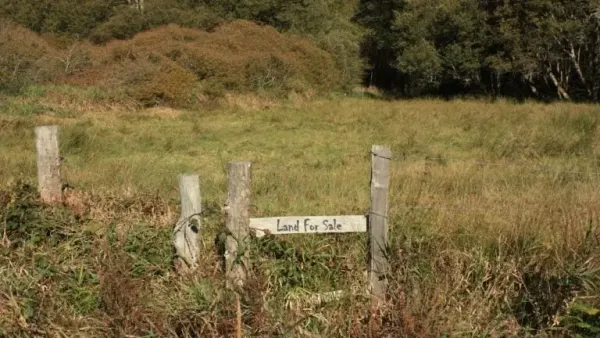
Vacant / Undeveloped
-
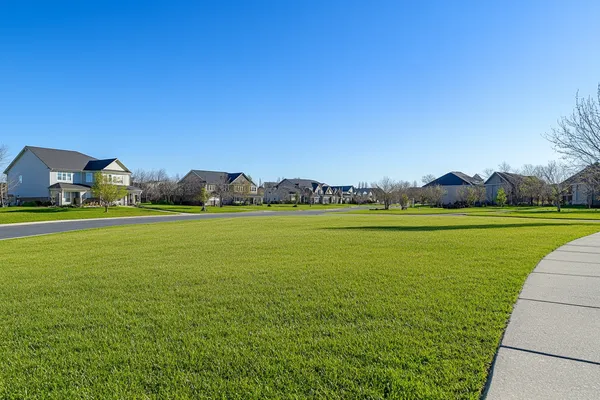
Residential / Suburban
-
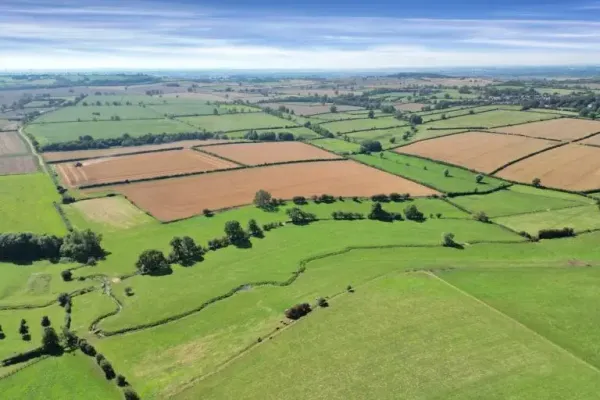
Farmland / Agricultural
-
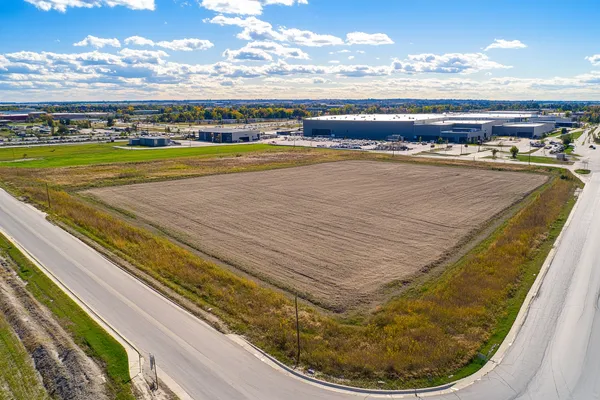
Commercial / Industrial
Georgia Land Resources
Related Guides for Georgia Landowners
Cash Sale vs. Agent vs. FSBO
Three Ways to Sell Georgia Land — and What Each Costs You
Rural land is a slow, thin market next to houses, and that gap is where the real cost of the wrong sale method hides. A traditional listing with an agent can run six to twelve months for a vacant Georgia tract, and the 5 to 10 percent commission plus the closing costs you cover come straight out of your proceeds. Selling it yourself saves the commission but hands you the entire job: pricing a parcel with few comparable sales, fielding buyers who never close, and lining up a Georgia attorney closing on your own, often from another state.
Selling to us trades top-dollar-someday for certainty now — a written cash offer in 24 hours, no commission, no repairs or showings, closing costs on us, and a clear-title parcel that can close in as little as 14 days. It is not the right answer for every parcel; land with genuine development upside and time to wait can do better on the open market. But for an idle, inherited, or tax-burdened tract, the math usually favors the clean exit. The table below lays the three side by side.
See the Difference
Why Sell to Us?
| Real Estate Agent | For Sale by Owner | Perspective Properties | |
|---|---|---|---|
| Commissions / Fees | 5–10% | Varies | None |
| Closing Costs | You Pay | You Pay | We Pay |
| Timeline | 6–12 months | Unknown | As Little as 14 Days |
| Showings / Inspections | Multiple | You Handle | None |
| Repairs Required | Often | Often | Never |
| Certainty of Sale | Low | Very Low | High |
Who You're Working With
About Perspective Properties
Perspective Properties is a family-run land-buying company, led by Christian Smith, that has bought rural land directly from owners for more than a decade. We do not broker leads or pass your information around to a list of other buyers — we buy with our own funds and hold the parcels in our own name, which is why we can commit to a written number within 24 hours and close in as little as 14 days on clear title. Today we buy in nine states, with our Georgia work centered on Bulloch County and the South Georgia counties around it.
For you as a seller, that means a straight process and a real person on the other end of it. We tell you what we see in the county records, including anything — a CUVA covenant, a title gap, unpaid back taxes — that could change your net. We point you to a Georgia-licensed attorney when a situation calls for one, and we close remotely so you never have to travel. You can read more about who we are and how we work, and the offer is always yours to walk away from.
Common Questions From Georgia Sellers
Georgia Land Selling FAQ
Do I need a real estate license to sell my land in Georgia?
Georgia generally doesn't require a real estate license for owners selling their own property — but Georgia is an attorney-state for closings, and license-exemption boundaries vary, so confirm with a Georgia-licensed attorney before signing if you have any doubt. Direct owner sales are routine across Georgia, and we handle title work and closing through your local Georgia closing attorney or title company. You sign the deed; the closing attorney handles recording with the county and disbursement of funds. If your situation is more complex — multiple heirs in multiple states, partial ownership, contested title, or an estate that has not been through probate — we will tell you what we are seeing and recommend you consult a Georgia-licensed attorney before signing.
How long does closing typically take in Georgia?
Georgia closings typically run 14 to 21 days from accepted offer to wire. Georgia uses closing attorneys rather than title companies to coordinate the deed transfer — the closing attorney orders title, issues a commitment, handles recording with the county, and disburses funds. That process is well-established for rural Bulloch and South Georgia parcels. Longer timelines show up with unresolved successions, unresolved heir disputes, or older deeds where the chain of ownership needs to be reconstructed through the county records. Remote closings are standard — your home-state notary public handles the signing, and the Georgia closing attorney coordinates the rest.
Do you buy land with back taxes owed in Georgia?
Tax-delinquent South Georgia parcels are common in our pipeline. The Georgia county tax commissioner is the point of contact, and delinquent taxes go to a county tax-lien sale cycle that can accelerate once a notice has been filed. Our closing attorney calculates the payoff, settles the balance at closing, and nets the amount against sale proceeds. In most cases, you don't pay out of pocket; if back taxes exceed your offer, our team walks you through the options before closing. Tell us upfront if taxes are owed in Bulloch or your South Georgia county so we build it into the offer cleanly.
Can I sell my Georgia parcel without traveling?
Out-of-state Georgia closings are standard practice for us. South Georgia rural land is moderately absentee-owned, particularly across the Bulloch corridor and surrounding counties, where heirs often live in Atlanta, Savannah, Jacksonville, or further afield. Georgia's attorney-closing requirement is handled entirely on the Georgia side — your local Georgia closing attorney coordinates the deed recording, and a mobile notary near you handles the signature. Funds wire the same day closing is complete.
What is the typical offer range for Georgia rural land?
Offers vary by acreage, parcel features, road access, and county. Bulloch's Statesboro-Georgia Southern corridor prices very differently from rural farmland deeper in South Georgia or river-adjacent acreage on the Ogeechee. Submit your parcel — we'll send a specific written offer in as little as 24 hours.
Do I have to pay Georgia's transfer tax when I sell my land?
Georgia's real estate transfer tax under O.C.G.A. § 48-6-1 is small — $1.00 on the first $1,000 of value plus 10 cents for each additional $100, roughly one-tenth of one percent — and it doesn't apply at all when the consideration is $100 or less. By Georgia custom the seller usually bears it, and it's collected when the closing attorney records the deed and files the mandatory PT-61 declaration through the GSCCCA. On a cash sale to us, closing costs including this tax come out of the settlement, not your pocket. The bigger number to plan for is income tax on any gain, which Georgia taxes as ordinary income; inherited land often gets a stepped-up basis that reduces or erases it.
How do you handle inherited Georgia land with multiple heirs?
It's routine — most of the South Georgia land we buy is inherited. Georgia has no dollar-threshold small-estate affidavit; instead, when heirs agree and the estate has no debts, any heir can petition for an "order that no administration is necessary" under O.C.G.A. § 53-2-40, and a surviving spouse or minor children can use Year's Support (O.C.G.A. §§ 53-3-1 et seq.) to take title by court order. If several heirs share title, Georgia's Uniform Partition of Heirs Property Act (O.C.G.A. §§ 44-6-180 et seq.) governs how co-owned land is divided or sold. Your Georgia closing attorney confirms exactly who must sign, and we build the closing around it. Tell us how many owners are involved and we handle the rest.
Multi-State Coverage
Other States Where We Buy Land
What Our Clients Say
Trusted by Landowners
"Christian was awesome to work with. Super professional, easy to communicate with, you can tell he genuinely cares about what he does and about his clients. Highly recommend."
"We closed a transaction with Christian Smith — he is very knowledgeable and goes beyond his job to take care of his clients in a timely manner."
"This was a simple process and Christian was a pleasure to work with. He took care of anything that came up without hesitation and made the whole experience a breeze. I would highly recommend Perspective Properties if you're looking to buy or sell properties."