

Sell Your Tennessee Land for Cash — Fast, Fair Offers
From the Cumberland Plateau retirement belt around Crossville to Pickwick Lake in Hardin County and the Greene County foothills of East Tennessee — we make written cash offers on rural Tennessee land in as little as 24 hours. No agents. No fees. No drawn-out listings. Tell us your county and acreage for a written number fast.
All 95 counties · any condition · cash
- No fees
- Any condition
- Offer in 24 hours
Own land in Tennessee?
Get a cash offer in 24 hours.
- 95 counties covered
- 21–30 days to close, typical
- $0 fees or closing costs to you
- 24 hrs to a real offer
The land we buy here
- Hardwood ridge
- Plateau pasture
- Creek bottom
- Cutover timber
- Inherited & overgrown
The counties we buy in across Tennessee
The Perspective Properties Advantage
Why Choose Us
-

Fair Cash Offers
We research every property thoroughly to ensure you receive a competitive, market-based offer.
-

Fast Closings
Close in as little as 14 days. Faster on clear-title parcels — and we work to your timeline if you need longer.
-

Zero Commissions
No agent fees, no commissions, no hidden costs. The offer we make is the amount you receive.
-

Flexible Closings
Choose the closing date that works for your schedule. We work around your timeline, not ours.
Simple 3-Step Process
How It Works
-

Request Your Cash Offer
Fill out our quick form or give us a call. Tell us about your property and we'll start reviewing it right away.
-

Receive a No-Obligation Offer
We'll research your property and present you with a fair, no-obligation cash offer in as little as 24 hours.
-

Close on Your Terms
Pick your closing date. We handle all the paperwork, cover all closing costs, and pay you cash at closing.
Tennessee Land Context
Tennessee Land: Cumberland Plateau, Smokies, and Tennessee River Country
Tennessee is not one land market — it is several distinct land economies held together by state lines. The Cumberland Plateau retirement belt anchored by Crossville and Fairfield Glade has drawn retirees for decades with cooler summers, lower cost of living, and small-acreage homestead parcels. Crossville bills itself as Tennessee's "Golf Capital," and communities like Fairfield Glade and Lake Tansi represent decades of planned retirement-community development on the plateau. Cumberland Mountain State Park sits just outside Crossville. Further east, White County and Sparta carry a different character: bluegrass country, the legacy of Lester Flatt, Rock Island State Park where the Collins and Caney Fork rivers meet, and the eastern edge of the plateau.
East Tennessee layers multiple identities. Greeneville in Greene County is where Andrew Johnson lived, served as U.S. Senator, President, and is buried — not his birthplace (he was born in Raleigh, NC) but his adopted hometown. David Crockett Birthplace State Park sits in Limestone, west of Greeneville along the Nolichucky River. Greene is Appalachian agricultural foothills country — tobacco, cattle, and family farms that have passed through the same families for generations. Cocke County and Newport sit in the Great Smokies foothills where the French Broad and Pigeon Rivers run — serious whitewater rafting territory, Cherokee National Forest adjacency, and spillover demand from the Sevierville and Gatlinburg tourism corridor. Roane County and Kingston anchor Watts Bar Lake reservoir country, with Fort Loudon Lake to the south and the Manhattan Project legacy of Oak Ridge sitting on the county's eastern edge.
On the western edge of our footprint, Hardin County, Tennessee — not Hardin County, Texas — sits on the Tennessee River with Savannah as the county seat. Shiloh National Military Park is the defining historical feature of the county; Pickwick Lake on the Tennessee River draws recreational and second-home buyers. One pattern runs through all six counties: a meaningful share of rural acreage is absentee-owned. If you live out of state and the Tennessee parcel has been sitting idle for years, that's the most common situation we see. Closings are fully remote — documents by email, a notary visit near you for the deed signing, and funds wired to your account on closing day. No travel required.
Common Tennessee Seller Profiles
Who We Buy From in Tennessee
-
Heirs holding inherited mountain and plateau land
A family parcel on the Cumberland Plateau in Cumberland or White, or in the East Tennessee foothills of Greene or Cocke, that passed through two or three generations. Current heirs have full-time jobs and no interest in managing taxes and brush from a distance.
-
Retiree downsizers across the Cumberland Plateau
Owners who moved to the plateau for retirement on five or ten acres, then changed plans — health, family, or a move closer to grandchildren in another state. The Tennessee parcel sits idle and we close remotely.
-
Hunting-camp heirs in East Tennessee
Inherited tracts in Cocke, Greene, or Roane bought for deer, turkey, or weekend cabin use. The kids do not hunt, lease income does not cover taxes, and the parcel has not been visited in years.
-
Heirs and former residents who moved away from Tennessee
Children and grandchildren of Tennessee farmers who moved to Nashville, Atlanta, Charlotte, or further afield. The parcel is hours away, rarely visited, and easier to sell than to lease or list.
-
Divorce-driven sellers needing speed and certainty
Owners working through a Tennessee divorce who need a clean cash buyer on a calendar driven by the settlement rather than retail-listing seasonality. We can often work around settlement or family timelines, but title and closing requirements determine the final schedule.
These are common situations — not the only ones. If you own land in Tennessee and want a cash offer, submit your parcel below.
Tennessee Land Facts
Tennessee Land Selling Costs and Data at a Glance
Before you sell, it helps to see the numbers that actually touch a Tennessee land transaction — the transfer tax, what recording costs, what the state does and does not tax, and where rural values sit. Each figure below links to the statute or agency it comes from, so nothing here is a number we simply asserted. Rates change, so confirm current figures against the linked source before you rely on them at closing.
State transfer (recordation) tax
$0.37 per $100 of value or consideration, whichever is greater — roughly 0.37%. Set by TCA § 67-4-409(a) and administered by the Tennessee Department of Revenue. Most Tennessee counties do not layer a separate local transfer tax on top of it.
Mortgage tax
$0.115 per $100 of indebtedness on recorded long-term notes, under TCA § 67-4-409(b) — relevant mainly to seller-financed or land-contract sales, not a standard all-cash purchase.
Greenbelt acreage minimums
Agricultural and forest tracts need at least 15 acres, and open-space land at least 3 acres, to qualify for use-value assessment under TCA § 67-5-1004, per the Tennessee Comptroller.
State income tax on your gain
None. Tennessee has no income tax on a land-sale gain; the Hall tax on interest and dividends was fully repealed on January 1, 2021. Federal capital gains still apply — see IRS Topic 409.
Recording fees
Register-of-deeds fees start at $10 for the first two pages plus a per-page charge, under TCA § 8-21-1001, on top of the recordation tax above.
Average rural land value (2024)
Tennessee farm real estate averaged $5,710 per acre, cropland $5,610, and pasture $5,360, per the USDA NASS 2024 Land Values summary. Recreational tracts vary widely by frontage and access.
Counties statewide
95 counties across three constitutional Grand Divisions — East, Middle, and West Tennessee. County demographics and land figures are published in the U.S. Census QuickFacts for Tennessee.
Inherited-land basis
Inherited Tennessee land generally receives a stepped-up cost basis to its date-of-death value, which can erase most taxable gain. The definition of a capital asset sits at 26 U.S.C. § 1221.
Tennessee Land Law, Taxes & Closing
What Tennessee Law Actually Requires When You Sell Land
Most Tennessee land pages skip the law entirely. We think the details are exactly what a landowner needs, because the thing that stalls a sale is rarely the price — it is a probate that was never finished, a co-owned parcel with four names on the deed, or a greenbelt rollback nobody budgeted for. Here is how the statutes that matter actually read, with links to the primary sources so you can check every line yourself. None of this is legal advice; for anything unusual, talk to a Tennessee-licensed attorney, and we will tell you when we think you need one.
Inherited land and probate
Tennessee's Small Estate Probate Act carries a $50,000 threshold, but that figure applies only to personal property — codified at TCA § 30-4-102. Real property is not counted, and it cannot be transferred by a small-estate affidavit. That is the single most common misunderstanding we run into: inherited Tennessee land almost always needs a full probate proceeding to pass clean title, regardless of what the acreage is worth.
When there is no will, TCA § 31-2-104 controls who inherits. A surviving spouse takes a child's share or one-third of the estate, whichever is greater, so with two or more children the spouse holds one-third and the children split the rest. Creditors then get four months from the first published notice to file claims under TCA § 30-2-307, with a twelve-month outer limit from the date of death. Probate for real property runs through Chancery, Probate, or Circuit court depending on the county — the Tennessee court system lists which court handles estates where your parcel sits.
Co-owned land and the Heirs Property Act
Land that passes to several heirs without a will often ends up held as a tenancy in common — three siblings, or a dozen cousins, each owning an undivided share. Tennessee adopted the Uniform Partition of Heirs Property Act, TCA §§ 29-27-301 through 29-27-313, effective July 1, 2022. The Act rewired how a forced sale works: before any partition, the court orders an independent appraisal, gives the other cotenants a right to buy out the share of anyone who wants out, and favors dividing the land in kind over sending it to auction.
That cuts two ways for a seller. If you own a fractional interest and want cash, the buyout mechanism gives you a defined path instead of a courthouse fight. If you and your co-owners all agree to sell, a single cash buyer removes the need for any partition action at all — everyone signs the same deed at the same closing. We handle both, and we will say so early if we spot a co-ownership tangle that needs an attorney before anyone signs.
Deeds, recording, and remote closings
Tennessee is a notice state. Under TCA § 66-26-103, an unregistered deed is "null and void as to existing or subsequent creditors ... or bona fide purchasers ... without notice." In plain terms, whoever records first and without notice generally wins — which is why we record the deed with the county register of deeds the day we close, not later. Register-of-deeds fees are set by TCA § 8-21-1001, starting at $10 for the first two pages plus a per-page charge, and the University of Tennessee's County Technical Assistance Service publishes the acknowledgment rules those registers follow.
You do not have to be in Tennessee to close. The Online Notary Public Act, TCA § 8-16-301 and following, has authorized remote online notarization statewide since July 1, 2019. A notary in your home city — or a Tennessee online notary over two-way video — can notarize the deed, the title company wires your funds, and you never make the drive. For absentee owners who left the state years ago, that is usually the difference between selling and letting the parcel sit another decade.
Transfer tax and Tennessee's missing income tax
Tennessee's realty transfer tax — the recordation tax — is $0.37 per $100 of the greater of consideration or value, set by TCA § 67-4-409(a). On a $40,000 parcel that runs about $148. It is modest, and in our deals we spell out who pays it in the contract rather than leaving it to a closing-day surprise.
The bigger number is the one that is not there. Tennessee levies no state income tax on a land-sale gain. The Hall income tax, which had applied only to interest and dividends, was fully repealed effective January 1, 2021, per the Tennessee Department of Revenue. Federal capital gains still apply — long-term gains are taxed at 0, 15, or 20 percent, and inherited land generally receives a stepped-up basis to its date-of-death value, which can erase most of the gain. The IRS lays out the treatment in Topic 409, and the statutory definition of a capital asset lives at 26 U.S.C. § 1221. We buy land; we do not give tax advice — confirm your own basis with a CPA before closing.
Greenbelt classification and rollback taxes
A large share of rural Tennessee acreage sits in the state's Greenbelt program — the Agricultural, Forest and Open Space Land Act of 1976, TCA § 67-5-1004 and following, administered by the Tennessee Comptroller. Greenbelt taxes qualifying land on its use value instead of market value: agricultural and forest tracts need at least 15 acres, open-space land at least 3.
The catch is the rollback tax. When greenbelt land sells to a buyer who will not keep the classification, TCA § 67-5-1008 reclaims the deferred tax for the prior years — three years for agricultural or forest land, five years for open space. On a long-classified parcel that can be real money, and it is exactly the kind of exposure a retail buyer discovers only at closing. We price rollback risk into our offer up front and tell you where you stand, so it does not quietly eat into your proceeds.
Mineral rights on Tennessee land
Tennessee follows the general American rule: minerals pass with the surface unless a prior deed severed them. If your chain of title never reserved oil, gas, or coal, you are almost certainly conveying the minerals along with the dirt. Tennessee also has a dormant-mineral statute, TCA § 66-5-108, which addresses when long-unused severed mineral interests can revert to the surface owner after a twenty-year period of non-use.
For most Cumberland Plateau and East Tennessee parcels, minerals are a non-issue. On old family land that changed hands generations ago, though, a severed coal or gas interest sometimes surfaces in the title search. When it does, we do not walk — we adjust. Our title company traces the reservation, we tell you what it means for value, and we structure the purchase around whatever the record actually shows.
Tennessee Counties in Detail
A Closer Look at Tennessee Land, County by County
Cumberland County (Cumberland Plateau)
Crossville is Tennessee's "Golf Capital" — Fairfield Glade and Lake Tansi anchor the county's planned retirement communities, and Cumberland Mountain State Park sits just outside the city. Decades of out-of-state retiree in-migration have built a dense absentee-owner profile as estate parcels and downsizing tracts come back to market. Common sellers: retiree downsizers and family-homestead heirs.
Greene County (Northeast Tennessee)
Greeneville is Andrew Johnson's adopted hometown — where he lived, served as U.S. Senator and President, and is buried. David Crockett Birthplace State Park lies in Limestone, west of Greeneville along the Nolichucky River. Greene is Appalachian agricultural foothills country: tobacco, cattle, and multi-generational family farms. Common sellers: family-farm heirs and absentee owners.
Hardin County, TN (Tennessee River)
Savannah sits on the Tennessee River in Hardin County, Tennessee — not Hardin County, Texas. Shiloh National Military Park is the county's defining historical landmark; Pickwick Lake draws recreational and second-home buyers from across the mid-South. Common sellers: long-time owners and inherited-tract heirs.
Roane County (Watts Bar Lake)
Kingston and Harriman anchor Roane County, with Watts Bar Lake pulling steady recreational demand and Fort Loudon Lake to the south. The eastern edge of the county borders Oak Ridge — home of the Manhattan Project's Y-12 and K-25 facilities, now Oak Ridge National Laboratory. Common sellers: lake-adjacent heirs and absentee recreational owners.
Cocke County (Smokies Foothills)
Newport sits where the French Broad and Pigeon Rivers converge — serious whitewater rafting country, with Cherokee National Forest on the back side and Sevierville/Gatlinburg tourism demand spilling westward into adjacent acreage values. Common sellers: mountain-land heirs, hunting-camp inheritors, and tourism-adjacent absentee owners.
White County (Plateau Eastern Edge)
Sparta anchors White County at the eastern edge of the Cumberland Plateau — Sparta is Lester Flatt's adopted hometown and burial place, with Rock Island State Park at the confluence of the Collins and Caney Fork Rivers, and the upper Caney Fork running through the county's agricultural lowlands. Common sellers: family-homestead heirs and retiree downsizers.
We buy land in all 95 Tennessee counties, across the Cumberland Plateau, East Tennessee, and Tennessee River country — submit any parcel for a written offer in as little as 24 hours.
Statewide Tennessee Coverage
Every County in Tennessee Where We Buy Land
We buy rural land, vacant lots, and acreage in all 95 Tennessee counties. Tennessee's constitution divides the state into three Grand Divisions — East, Middle, and West — and every county below sits in one of them. If your county is on this list, we can make you a written cash offer; if you somehow do not see it, send the parcel anyway, because the list is the whole state.
County-specific guides are rolling out as we build them, so these are grouped by Grand Division rather than linked for now. Find yours below, then submit the parcel for a written offer in as little as 24 hours.
East Tennessee (33 counties)
Anderson, Bledsoe, Blount, Bradley, Campbell, Carter, Claiborne, Cocke, Cumberland, Grainger, Greene, Hamblen, Hamilton, Hancock, Hawkins, Jefferson, Johnson, Knox, Loudon, Marion, McMinn, Meigs, Monroe, Morgan, Polk, Rhea, Roane, Scott, Sevier, Sullivan, Unicoi, Union, and Washington.
Middle Tennessee (41 counties)
Bedford, Cannon, Cheatham, Clay, Coffee, Davidson, DeKalb, Dickson, Fentress, Franklin, Giles, Grundy, Hickman, Houston, Humphreys, Jackson, Lawrence, Lewis, Lincoln, Macon, Marshall, Maury, Montgomery, Moore, Overton, Perry, Pickett, Putnam, Robertson, Rutherford, Sequatchie, Smith, Stewart, Sumner, Trousdale, Van Buren, Warren, Wayne, White, Williamson, and Wilson.
West Tennessee (21 counties)
Benton, Carroll, Chester, Crockett, Decatur, Dyer, Fayette, Gibson, Hardeman, Hardin, Haywood, Henderson, Henry, Lake, Lauderdale, Madison, McNairy, Obion, Shelby, Tipton, and Weakley.
Grand Division boundaries follow the Tennessee Code (Title 4, Chapter 1). Wherever your Tennessee parcel sits, we can make an offer and close it remotely.
How a Typical Tennessee Sale Comes Together
A Situation We See Often in Tennessee
A typical situation we see in Tennessee starts with a phone call from someone who lives three states away. A parent or grandparent held twenty acres on the Cumberland Plateau or in the Greene County foothills for forty years. The land passed to two or three heirs, none of whom live in Tennessee anymore, and the property tax bill has quietly kept arriving. Sometimes the parcel is still in greenbelt. Sometimes probate was never fully closed. Almost always, nobody has walked the land in years.
The reason these parcels stall on the open market is that a retail buyer and their lender want everything clean before they commit — clear probate, no back taxes, a title with no gaps — and untangling that from another state is exactly the work the heirs were avoiding. That is the part we take on. When you send the county and acreage, we pull the parcel, order a full title search, and read the chain ourselves. If probate is unfinished, we tell you what the county requires. If greenbelt rollback is in play, we fold it into the number rather than springing it on you later.
From there it is a written cash offer, usually within 24 hours, and a closing handled by a local Tennessee title company. Back taxes get calculated with the county trustee and settled at closing, netted against your proceeds. You sign with a notary in your own town, the deed records with the register of deeds, and the funds wire to your account — often inside two weeks on clear title. No detail here describes a specific past deal; it is simply how Perspective Properties works a Tennessee parcel from first call to recorded deed.
Got Cumberland Plateau or East Tennessee land you're done holding?
We'll have a written cash offer to you in as little as 24 hours.
Any Size, Any Condition
We Buy All Types of Land
-
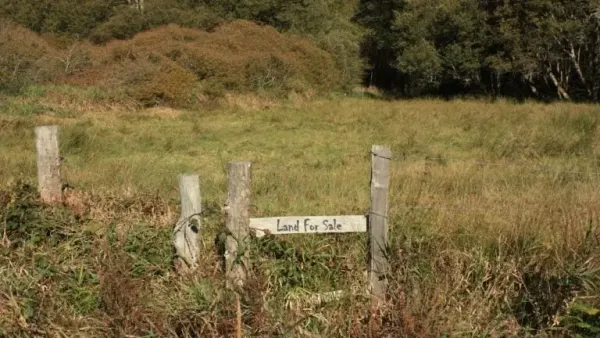
Vacant / Undeveloped
-
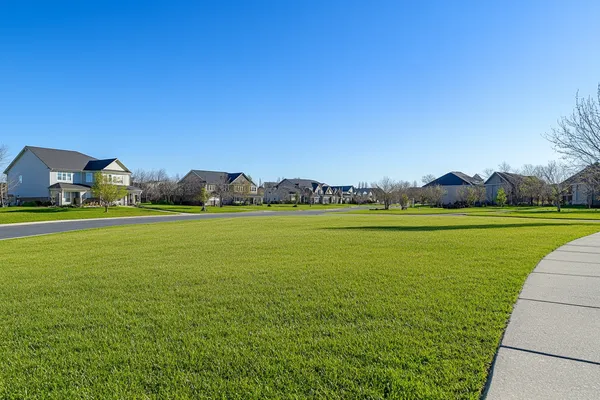
Residential / Suburban
-
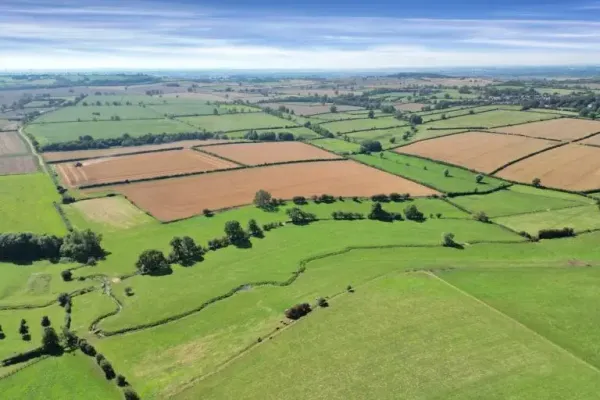
Farmland / Agricultural
-
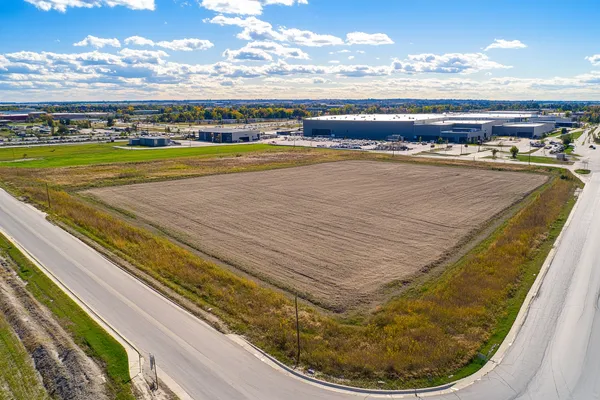
Commercial / Industrial
Tennessee Land Resources
Related Guides for Tennessee Landowners
Cash Sale vs. Agent vs. FSBO
Three Ways to Sell Tennessee Land — and What Each Costs You
Rural acreage moves slower than a house, and that gap is where the cost of the wrong sale method shows up. List a Cumberland Plateau or East Tennessee tract with an agent and you're typically looking at six months or more before a closing date, plus the standard 5 to 10 percent commission and your share of closing costs coming straight off the top. For sale by owner skips the commission, but you take on pricing a parcel with thin comparable sales, screening buyers who never show up with financing, and coordinating a Tennessee closing — title search, recordation, notary — yourself, often from another state.
A direct cash sale trades the chance at a higher someday number for a set number now: a written offer within 24 hours, no commission, no repairs or showings, and a local Tennessee title company handling the search and the recorded deed. Clear-title parcels close in as little as 14 days, and remote online notarization means you never have to drive back to Crossville, Greeneville, or Savannah to sign. Land with real development upside and no urgency can sometimes do better waiting on a retail buyer — but for an inherited, idle, or tax-burdened parcel, the certainty of a direct sale usually wins out. The table below lines up all three side by side.
See the Difference
Why Sell to Us?
| Real Estate Agent | For Sale by Owner | Perspective Properties | |
|---|---|---|---|
| Commissions / Fees | 5–10% | Varies | None |
| Closing Costs | You Pay | You Pay | We Pay |
| Timeline | 6–12 months | Unknown | As Little as 14 Days |
| Showings / Inspections | Multiple | You Handle | None |
| Repairs Required | Often | Often | Never |
| Certainty of Sale | Low | Very Low | High |
Who You're Working With
About Perspective Properties
Perspective Properties LLC is led by Managing Partner Christian Smith, who built the company around a simple idea: selling land should not require an agent, a listing, or a six-month wait. We have spent more than a decade buying rural land directly from owners, and Tennessee is one of nine states we work in — alongside Alabama, Arkansas, Georgia, Louisiana, Michigan, New Hampshire, North Carolina, and Texas — from the Cumberland Plateau retirement corridor to Tennessee River bottomland and the Smokies foothills.
Every offer is backed by our own funds, not a lender's approval or an assignment contract we hope someone else closes. There are no commissions, no listing fees, and the number we put in writing within 24 hours is the number that shows up at the closing table. Tennessee parcels carry their own wrinkles — greenbelt rollback, an unfinished probate, a severed mineral interest from three owners back — and we work through those with your local Tennessee title company as a matter of course. When something needs a Tennessee-licensed attorney before you sign, we tell you plainly rather than let you find out at closing.
Common Questions From Tennessee Sellers
Tennessee Land Selling FAQ
Do I need a real estate license to sell my land in Tennessee?
In Tennessee, selling your own parcel typically doesn't require a real estate license — but exemption rules vary case-by-case, so consult a Tennessee-licensed attorney if your situation is at all unusual. Direct owner sales are routine across Tennessee, and we handle title and closing through your local Tennessee title company. You sign the deed; the title company handles recording and disbursement. If your situation is more complex — multiple heirs in multiple states, partial ownership, contested title, or an estate not yet through probate — we will tell you what we are seeing and recommend you consult a Tennessee-licensed attorney before signing.
How long does closing typically take in Tennessee?
Tennessee closings generally run 14 to 21 days from accepted offer to wire. Deeds in Tennessee are recorded with the county register of deeds, and the title company manages the search and commitment. For clear title on a long-held Cumberland Plateau or East Tennessee parcel, two weeks is achievable. What stretches the timeline is an unresolved probate, scattered heirs who need to be coordinated across multiple states, or older agricultural deeds where the chain of ownership has a gap. Tennessee closings move electronically as a matter of routine — e-signatures and a mobile notary handle the seller's side without a courthouse trip.
Do you buy land with back taxes owed in Tennessee?
Yes. Property taxes in Tennessee are collected by the county trustee, but delinquent parcels are referred to the county chancery court (clerk and master) for the actual tax sale. After the auction, the original owner has a one-year redemption window to pay the back taxes plus interest and reclaim the property. We see this most often on absentee-held Plateau and East Tennessee parcels where the heir left the state years ago and stopped tracking the bills. Our team works with your local Tennessee title company and the county trustee's office to calculate the payoff, settle the back taxes at closing, and net the amount against sale proceeds. In most cases, you don't pay out of pocket; if back taxes exceed your offer, our team walks you through the options before closing. Tell us upfront if taxes are owed so we build it into the offer cleanly.
Can I sell my Tennessee parcel without traveling there?
Yes. Sun Belt retirees and heirs who moved to Nashville, Atlanta, Charlotte, or further close Tennessee parcels from home all the time. The Cumberland Plateau and East Tennessee foothills have a dense absentee-owner base — former residents who moved to the cities or the Sun Belt, plus retirees who left the Tennessee parcel behind. Closing is electronic: documents arrive by email, a notary public in your home city notarizes the deed, and funds wire to your bank the day of closing. No travel required.
I inherited Tennessee land — do I have to finish probate before I can sell?
Usually, yes — and not in the way most people expect. Tennessee's $50,000 small-estate procedure covers only personal property; real property is excluded under TCA § 30-4-102, so inherited land almost always needs a full probate to pass clean title, no matter what the acreage is worth. If several heirs share the parcel, the Uniform Partition of Heirs Property Act (TCA §§ 29-27-301 and following) can also apply. We work alongside your title company or attorney to sort out what the county requires, and we will flag early if probate has to be opened or finished first.
Will I owe Tennessee or federal tax when I sell my land?
Tennessee charges no state income tax on a land-sale gain — the Hall tax on interest and dividends was fully repealed on January 1, 2021 — so the only income tax in play is federal capital gains. Long-term gains are taxed at 0, 15, or 20 percent, and inherited land generally gets a stepped-up basis to its date-of-death value, which can wipe out most of the gain. You will also owe the state recordation tax of $0.37 per $100 under TCA § 67-4-409. We are land buyers, not tax advisors, so confirm your basis with a CPA before closing.
What is the typical offer range for Tennessee rural land?
Offers vary by acreage, county, road access, water/lake frontage, and parcel features. A Cumberland Plateau retirement-corridor parcel prices very differently from a Smokies-foothill recreational tract or a river-frontage parcel along the Tennessee River. Submit your parcel — we'll send a specific written offer in as little as 24 hours.
What Our Clients Say
Trusted by Landowners
"Christian was awesome to work with. Super professional, easy to communicate with, you can tell he genuinely cares about what he does and about his clients. Highly recommend."
"We closed a transaction with Christian Smith — he is very knowledgeable and goes beyond his job to take care of his clients in a timely manner."
"This was a simple process and Christian was a pleasure to work with. He took care of anything that came up without hesitation and made the whole experience a breeze. I would highly recommend Perspective Properties if you're looking to buy or sell properties."