

Sell Your New Hampshire Land for Cash — Fast, Fair Offers
From the White Mountains around Lebanon and Hanover to Mount Washington Valley ski country and Lake Winnipesaukee's Wolfeboro shore — we make written cash offers on rural New Hampshire land in as little as 24 hours. Vacation parcels, ski-country lots, and inherited mountain land all welcome. No agents. No fees. No drawn-out listings.
All 10 counties · any condition · cash
- No fees
- Any condition
- Offer in 24 hours
Own land in New Hampshire?
Get a cash offer in 24 hours.
- 10 counties covered
- 21–30 days to close, typical
- $0 fees or closing costs to you
- 24 hrs to a real offer
The land we buy here
- Sloped woodland
- Stone-wall pasture
- Back lot with an old logging road
- Seasonal-access acreage
- Inherited & overgrown
The counties we buy in across New Hampshire
The Perspective Properties Advantage
Why Choose Us
-

Fair Cash Offers
We research every property thoroughly to ensure you receive a competitive, market-based offer.
-

Fast Closings
Close in as little as 14 days. Faster on clear-title parcels — and we work to your timeline if you need longer.
-

Zero Commissions
No agent fees, no commissions, no hidden costs. The offer we make is the amount you receive.
-

Flexible Closings
Choose the closing date that works for your schedule. We work around your timeline, not ours.
Simple 3-Step Process
How It Works
-

Request Your Cash Offer
Fill out our quick form or give us a call. Tell us about your property and we'll start reviewing it right away.
-

Receive a No-Obligation Offer
We'll research your property and present you with a fair, no-obligation cash offer in as little as 24 hours.
-

Close on Your Terms
Pick your closing date. We handle all the paperwork, cover all closing costs, and pay you cash at closing.
New Hampshire Land Context
New Hampshire Land: White Mountains, Lakes Region, and Vacation Country
New Hampshire's rural land market is built around the White Mountains, and the two counties we work in are the heart of it. Grafton County runs along the western White Mountains — Lebanon and Hanover anchor it, with Dartmouth College and the Connecticut River defining the western edge, and Squam Lake, Newfound Lake, and Franconia Notch State Park (Cannon Mountain, the Flume Gorge, and the site of the Old Man of the Mountain) filling in the interior. Carroll County anchors the eastern side: Conway and North Conway at the center of the Mount Washington Valley, with Cranmore, Attitash, Wildcat, and Bretton Woods — at the base of the Mount Washington Cog Railway — making Carroll a true four-season destination. Lake Winnipesaukee's eastern shore, including Wolfeboro (the self-described oldest summer resort in America), also falls within Carroll. White Mountain National Forest spans both counties.
The demand pool for New Hampshire land is different from most rural markets. Buyers here come from Boston, New York, and the broader Northeast corridor — vacation-property buyers, ski-country second-home builders, and retirees looking for mountain views, lake frontage, and four-season access. That shapes what land here is worth, and it also shapes who sells: a meaningful share of rural New Hampshire acreage is held by absentee owners who bought a parcel years ago intending to build, then never broke ground. Life changed direction, the parcel stayed, and the annual town tax bill kept arriving.
We evaluate any New Hampshire parcel — quality of access, view, and frontage shapes the offer, not whether to make one. A back-country Grafton tract and a Carroll county ski-adjacent lot are two very different parcels, but both get a specific written offer. Submit your parcel and we'll tell you what we can pay and how fast we can close.
Common New Hampshire Seller Profiles
Who We Buy From in New Hampshire
-
Vacation-property divestors in the White Mountains
Owners who bought a New Hampshire mountain parcel a decade or two ago intending to build a cabin or vacation home, then never broke ground. Plans changed, the kids grew up, and the parcel sits idle while the annual New Hampshire tax bill keeps coming.
-
Ski-country retirees in Carroll and Grafton
Owners near Bretton Woods, Cannon, Loon, Waterville, or the Mount Washington Valley ski areas who bought New Hampshire mountain land for retirement and have since changed direction — moved south, downsized, or chose a different state for retirement entirely.
-
Heirs holding inherited mountain land
A New Hampshire parcel in Grafton or Carroll that passed through one or two generations. Current heirs live in Boston, New York, Connecticut, or further afield, have full-time jobs, and have no interest in driving north every spring to manage taxes, brush, and seasonal access.
-
Out-of-state owners of vacation tracts
Children and grandchildren of original New Hampshire vacation-property buyers who moved away decades ago. The New Hampshire parcel is hours away, rarely visited, and easier to sell than to lease, list, or develop on a long timeline.
-
Tax-burdened absentee owners
For absentee heirs who never planned to own New Hampshire land in the first place, the annual town and county bill is real money. When taxes have started to accrue or a tax-sale notice has arrived from a New Hampshire town, selling beats letting the bill compound.
These are common situations — not the only ones. If you own land in New Hampshire and want a cash offer, submit your parcel below.
New Hampshire Land Sale Facts
What a New Hampshire Land Sale Costs and How It Is Taxed
Before you weigh any offer on a New Hampshire parcel, it helps to know the handful of numbers a sale actually turns on. New Hampshire sits at an unusual spot. It is one of the most seller-friendly states in the country on income tax, and one of the few that bills its transfer tax to the seller as well as the buyer. The figures below decide what you net. Each is tied to the statute or the state agency that sets it, with the primary source linked so you can check it yourself rather than take our word for it.
State transfer tax: $0.75 per $100, charged to both sides
New Hampshire's Real Estate Transfer Tax (RETT) is charged to each of buyer and seller under RSA 78-B. As the seller you owe roughly $7.50 per $1,000 at closing. The rate is confirmed by the NH Department of Revenue Administration.
No county transfer tax
New Hampshire's transfer tax is state-level only. No additional county or municipal transfer tax is layered on top.
State income tax on your gain: none
New Hampshire has no broad income tax, and its Interest & Dividends Tax was fully repealed effective January 1, 2025. Your capital gain faces no state tax.
Federal capital gains still apply
Long-term gains are taxed at 0%, 15%, or 20% depending on your bracket, per IRS Topic No. 409. Inherited land usually gets a stepped-up basis that shrinks the taxable gain.
Recording fees: roughly $10 to $25 plus a $25 surcharge
About $10 to $25 for the first page plus roughly $4 per additional page at the county Registry of Deeds, plus a flat $25 LCHIP surcharge per document under RSA 478:17-g.
Average land value: $6,500 per acre
New Hampshire farm real estate averaged $6,500 per acre statewide in 2025, up 4.0% year over year, per the USDA NASS Land Values summary. Raw mountain and timber tracts sell well below that average; view and lake parcels well above it.
10 counties, each with its own Registry of Deeds
Belknap, Carroll, Cheshire, Coos, Grafton, Hillsborough, Merrimack, Rockingham, Strafford, and Sullivan. Your deed records at the Registry of Deeds in the county where the land sits.
Remote and online closing available statewide
New Hampshire authorized remote online notarization under RSA 456-B, so out-of-state sellers can sign without traveling north.
The line that trips up the most out-of-state sellers is the transfer tax split. Plenty of states charge the buyer alone. New Hampshire splits its Real Estate Transfer Tax down the middle, so your side of a sale carries its own $7.50 per $1,000. It is not a large number on a modest lot, but it is real, and a buyer who leaves it out of the conversation is quietly handing you a smaller net than the headline offer implied. We build the seller-side transfer tax, the recording fees, and any back taxes into the figure we quote, so the number we name stays close to the number you keep.
New Hampshire Land Law, Taxes & Closing
What New Hampshire Law Actually Requires When You Sell Land
Most cash-buyer sites tell you they are fast and skip the part where they explain the rules that decide whether a sale can close at all. We would rather show our work. What follows is the New Hampshire framework we run every parcel through: the probate path for inherited land, the transfer tax both sides pay, the recording mechanics, and the property-tax program that can leave a surprise bill on larger tracts. None of this is legal advice. It is the map we use, with the statutes cited so you can read them directly.
Inherited land and New Hampshire probate
A large share of the rural land we buy in New Hampshire is inherited, and inherited land almost always has to clear probate before clean title can pass. New Hampshire runs probate through the Circuit Court's Probate Division, and the estate statutes live in RSA Title LVI. If a parcel is still titled in a deceased parent's or grandparent's name, the estate — not the heirs individually — generally has to be administered before anyone can sign a deed the title company will insure.
New Hampshire does not have a dollar-capped "small estate affidavit" the way Texas does. The closest simplified path is a waiver of administration under RSA 553:32, which applies when the sole beneficiary is the surviving spouse, the decedent's only heir, or a trust, and lets a qualifying estate skip full formal accounting. When someone dies without a will, New Hampshire's intestate succession rules in RSA 561 decide who inherits, and every one of those heirs typically has to sign. A simple estate that qualifies for the waiver can close in roughly six months. A contested or claim-laden estate can run twelve to twenty-four. When several heirs share a parcel and cannot agree, the fallback is a partition action under RSA 547-C, which is slow and costly — and often the reason a family finally decides a clean cash sale is the better exit.
The transfer tax both sides pay
New Hampshire's Real Estate Transfer Tax is set by RSA 78-B, and it has a feature that catches out-of-state owners off guard: it is charged to the buyer and the seller, not just the buyer. The rate is $0.75 per $100 of consideration on each side, so as the seller you owe roughly $7.50 for every $1,000 of sale price. On a $50,000 parcel that is about $375 out of your proceeds.
The Department of Revenue Administration collects the tax, and the title company handles the remittance at closing, so it comes out of the settlement rather than your checkbook. What matters is that you know it is there. A fair offer accounts for the seller-side tax up front instead of letting it quietly erode your net, and that is how we quote.
Deeds, recording, and mineral rights
Conveyances of New Hampshire real estate run under RSA 477, which sets the statutory short forms for warranty, quitclaim, and fiduciary deeds. Inherited parcels usually pass by fiduciary deed from an executor. A clean owner sale typically uses a warranty deed. New Hampshire records at the county level: there are ten County Registries of Deeds, and your deed records in the county where the land sits, not where you live.
Recording carries a small per-page fee plus the flat $25 LCHIP surcharge under RSA 478:17-g. Mineral rights in New Hampshire pass with the surface title unless a prior deed severed them, and because the state has almost no commercial mineral extraction, severed minerals are rare on the parcels we see. That is one fewer complication than you would face selling in an oil-and-gas state.
Property tax, Current Use, and the land-use-change penalty
New Hampshire property tax is assessed and billed at the town level, and the state's effective rates are among the highest in the country, which is exactly why an idle out-of-state parcel becomes a nagging annual cost. Larger tracts are often enrolled in the Current Use program under RSA 79-A, which taxes qualifying open space, farm, and forest land of ten or more acres on its use value rather than its development value. That is a substantial break while you hold the land.
The catch is the land-use-change tax. When land comes out of Current Use, the town levies 10% of full market value. The UNH Cooperative Extension keeps a plain-English overview of how the program and its penalty work. If your parcel is enrolled, a straight sale to us does not by itself trigger the change tax, but a sale followed by development can, so it is worth knowing before you sign. Timber has its own 10% yield tax at harvest under RSA 79. We flag Current Use status on every enrolled parcel we evaluate so the number never blindsides you at closing.
New Hampshire Counties in Detail
A Closer Look at New Hampshire Land, County by County
Grafton County (Western White Mountains)
Lebanon and Hanover anchor the county along the Connecticut River, with Dartmouth College as the dominant institution. Squam Lake (made famous by On Golden Pond), Newfound Lake, and Franconia Notch State Park — home to Cannon Mountain, the Flume Gorge, and the Old Man of the Mountain memorial — define the county's natural character. White Mountain National Forest spreads across the eastern half. Common sellers: vacation-tract heirs, Dartmouth-area retirees, and absentee mountain-land owners.
Carroll County (Eastern White Mountains / Lake Country)
Conway and North Conway sit at the center of the Mount Washington Valley, with Cranmore, Attitash, Wildcat, and Bretton Woods (at the base of the Mount Washington Cog Railway) anchoring the ski-country identity. Lake Winnipesaukee's eastern shore — including Wolfeboro, the self-described oldest summer resort in America — and Ossipee Lake round out the county's four-season draw. Common sellers: ski-country retirees, vacation-property divestors, and inherited mountain-land heirs.
We make written offers on land in all ten New Hampshire counties — the full regional breakdown is below.
Statewide Coverage
New Hampshire's Land Regions, and Every County We Buy In
New Hampshire is small — about 1.4 million people across roughly 8,950 square miles, per the U.S. Census Bureau — but its land divides into distinct regions that behave like separate markets. We buy across all of them. Where a parcel sits changes what it is worth, and who wants it, far more than raw acreage does, so it helps to know which region yours falls in.
The White Mountains (northern Grafton, Carroll, and southern Coos) are the four-season core: ski areas, notches, and the tourist economy of the Mount Washington Valley. It is where vacation-tract and inherited mountain land concentrate. The Lakes Region (Belknap and southern Carroll) wraps Lake Winnipesaukee and its neighbors, where frontage and water access drive value more than anywhere else in the state. The Upper Valley (western Grafton and Sullivan along the Connecticut River) is anchored by Lebanon, Hanover, and Dartmouth, mixing farm ground with a stable professional economy.
Farther south, the Monadnock Region (Cheshire and western Hillsborough) is quieter, more affordable rural and forest land in the shadow of Mount Monadnock. The Merrimack Valley (Merrimack and eastern Hillsborough) holds the state's population center — Manchester, Nashua, and Concord — where "land" tends to mean infill lots and the urban edge. The Seacoast (Rockingham and Strafford) is New Hampshire's short but valuable eighteen-mile coast, where raw land is scarce and priced accordingly. And the Great North Woods (northern Coos) is the vast, sparsely settled timber country above the notches, where large acreage trades on timber value and remoteness. A backcountry Coos tract and a Winnipesaukee-adjacent Belknap lot are both New Hampshire land, and we make written offers on both. The offer simply reflects which world the parcel lives in.
Because we have not yet built individual pages for each New Hampshire county, the list below groups all ten counties by region rather than linking out to pages that do not exist yet. Wherever your parcel sits, you can submit it for a written offer in as little as 24 hours.
-
White Mountains & North
Coos — Berlin, the Great North Woods, timber country, and the Mount Washington summit.
Grafton — western White Mountains, Lebanon, Hanover, Franconia Notch, and the Upper Valley.
Carroll — Mount Washington Valley, Conway, and the eastern ski country. -
Lakes Region & Central
Belknap — Laconia, Gunstock, and Lake Winnipesaukee's south shore.
Merrimack — Concord, the state capital, and the central Merrimack Valley.
Sullivan — Claremont and the southern Upper Valley along the Connecticut River. -
South & Seacoast
Hillsborough — Manchester, Nashua, and the state's population center.
Cheshire — Keene and the Monadnock Region's forest land.
Rockingham — Portsmouth, the Seacoast, and the southeastern towns.
Strafford — Dover, Rochester, and the northern Seacoast.
A Typical New Hampshire Situation
What a Common New Hampshire Sale Looks Like From Our Side
The situation we see most often in New Hampshire runs something like this. A family bought forty acres in the White Mountains a generation ago, meaning to build a cabin that never happened. The original owners have since passed, the parcel sits in an estate, and three siblings now share it from homes in Massachusetts, Connecticut, and Florida. None of them has driven up in years. The town tax bill still arrives every fall, a couple of them have gone unpaid, and the land is enrolled in Current Use, so nobody is quite sure what a sale would actually cost.
Here is how we work a parcel like that. First we confirm what the county's records and the town tax collector actually show: who is on the deed, whether the estate went through the Probate Division, what is owed, and whether Current Use is in play. If the estate has not been administered, we tell the family plainly that a waiver of administration under RSA 553:32 or a short formal probate has to happen before title can pass, and we point them to a New Hampshire attorney rather than pretend it is optional. We price the parcel on what it is — access, frontage, view, year-round reach — not on a per-acre average, and we put the seller-side transfer tax, the recording costs, and the back taxes into the written offer so the number is honest.
From there it is straightforward. The heirs sign with a mobile notary in their own states, the New Hampshire title company records the deed at the county Registry and settles the back taxes out of proceeds, and the funds wire the day of closing. On a clear-title parcel that can happen in as little as 14 days. When probate has to run first, it takes as long as the court takes, and we wait. No agent, no listing, no showings, no repairs. That is the whole shape of it.
Got White Mountain or lakes-region acreage you never built on?
We'll have a written cash offer to you in as little as 24 hours.
Any Size, Any Condition
We Buy All Types of Land
-
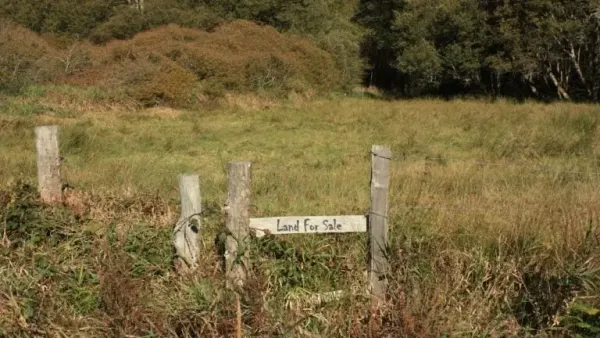
Vacant / Undeveloped
-
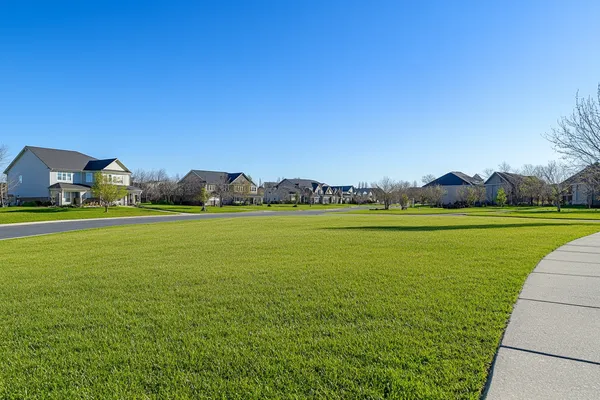
Residential / Suburban
-
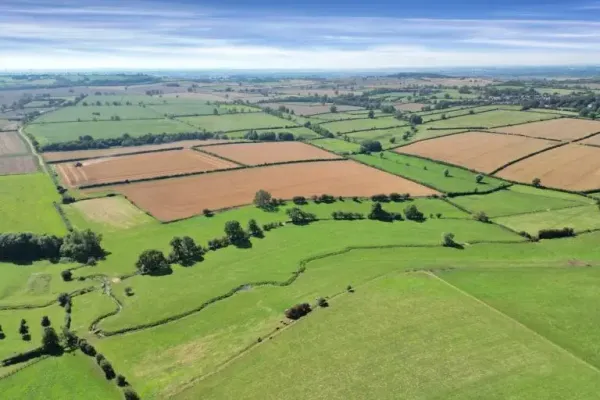
Farmland / Agricultural
-
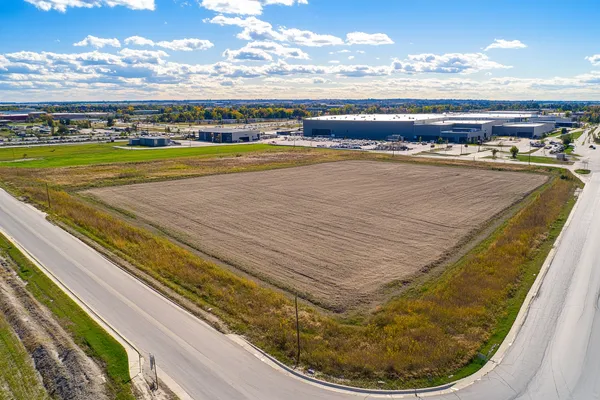
Commercial / Industrial
New Hampshire Land Resources
Related Guides for New Hampshire Landowners
Cash Sale vs. Agent vs. FSBO
Three Ways to Sell New Hampshire Land — and What Each Costs You
Rural New Hampshire land is a slow, thin market next to houses, and that gap is where the real cost of the wrong sale method hides. A traditional listing with an agent can run six to twelve months for a vacant White Mountains or lakes-region tract, and the 5 to 6 percent commission plus closing costs come straight out of your proceeds — on top of showings and the wait for a buyer who wants a parcel most people drive past. Selling it yourself saves the commission but hands you the entire job: pricing a lot with few comparable sales, fielding buyers who never close, and lining up a New Hampshire title company and mobile notary on your own, often from another state.
Selling to us trades top-dollar-someday for certainty now — a written cash offer in 24 hours, no commission, no repairs or showings, and a clear-title parcel that can close in as little as 14 days, with the seller-side transfer tax and recording fees already built into the number we quote. It is not the right answer for every parcel; a premium Mount Washington Valley or lakefront lot with time to wait can do better listed. But for an idle vacation tract, an inherited mountain parcel, or land carrying back taxes, the math usually favors the clean exit. The table below lays the three side by side.
See the Difference
Why Sell to Us?
| Real Estate Agent | For Sale by Owner | Perspective Properties | |
|---|---|---|---|
| Commissions / Fees | 5–10% | Varies | None |
| Closing Costs | You Pay | You Pay | We Pay |
| Timeline | 6–12 months | Unknown | As Little as 14 Days |
| Showings / Inspections | Multiple | You Handle | None |
| Repairs Required | Often | Often | Never |
| Certainty of Sale | Low | Very Low | High |
Who You're Working With
About Perspective Properties
Perspective Properties LLC is led by Managing Partner Christian Smith. We have spent more than a decade buying rural land directly from owners — no agents, no listings — and we now operate in all nine states we serve: Alabama, Arkansas, Georgia, Louisiana, Michigan, New Hampshire, North Carolina, Tennessee, and Texas. New Hampshire's White Mountains and lakes-region acreage fit the same pattern we see everywhere else: an owner who no longer wants the parcel, and no interest in the time or cost of a traditional listing.
Every offer is backed by our own funds, so a closing never waits on a lender's timeline or an outside investor's approval. We put a written cash offer in front of you in as little as 24 hours, and on a parcel with clear title we can close in as little as 14 days. When a New Hampshire parcel has a real complication — an estate that hasn't cleared probate, land enrolled in Current Use, a contested title — we say so plainly and point you to a New Hampshire-licensed attorney rather than pretend it isn't there.
Common Questions From New Hampshire Sellers
New Hampshire Land Selling FAQ
Do I need a real estate license to sell my land in New Hampshire?
Selling your own NH land generally doesn't require a real estate license — though state exemption rules vary case-by-case, so confirm with a New Hampshire-licensed attorney if your situation is unusual. Direct owner sales are routine across New Hampshire, and we handle title and closing through your local New Hampshire title company. You sign the deed; the title company handles recording with the county Registry of Deeds and disbursement of funds. If your situation is more complex — multiple heirs in multiple states, partial ownership, contested title, or an estate that has not been through probate — we will tell you what we are seeing and recommend you consult a New Hampshire-licensed attorney before signing.
How long does closing typically take in New Hampshire?
New Hampshire closings typically run 14 to 21 days from accepted offer to wire. Deeds are recorded with the county Registry of Deeds (Carroll County for the Mount Washington Valley, Grafton County for the western White Mountains). What stretches a timeline is unresolved estate administration, deed gaps from older family conveyances, or a search that surfaces a title defect requiring a curative deed. Winter weather on a White Mountain parcel can occasionally slow a survey or inspection, but typically does not delay the closing itself, depending on parcel-specific factors. Remote closings are standard.
Do you buy land with back taxes owed in New Hampshire?
Yes. Back taxes are common across New Hampshire vacation-property tracts, particularly among absentee-owned acreage where the heir moved out of state and missed multiple tax notices across Grafton or Carroll County towns. NH taxes property at the town level with a local lien process — once a lien is filed, a two-year redemption window applies before the town can begin the tax-deed process. Our team works with your local New Hampshire title company and the relevant town tax collector to calculate the payoff, settle the back taxes at closing, and net the amount against sale proceeds. In most cases, you don't pay out of pocket; if back taxes exceed your offer, our team walks you through the options before closing. Tell us upfront if taxes are owed so we build it into the offer cleanly.
Can I sell my NH parcel without traveling to New Hampshire?
Yes. Out-of-state NH closings are routine — most of our sellers are out-of-state vacation-property and ski-country owners across the Boston-NY-CT corridor who close without traveling north. Your New Hampshire title company handles the county Registry of Deeds recording on the NH end; a mobile notary in your home state handles the deed signing; funds wire the day of closing.
What is the typical offer range for New Hampshire rural land?
Offers vary by parcel quality more than by acreage in New Hampshire — view, road access, frontage, ski-area or lake proximity, and year-round access all shape the offer. A Mount Washington Valley premium parcel prices very differently from a backcountry Grafton tract. Submit your parcel — we'll send a specific written offer in as little as 24 hours.
Will I owe New Hampshire's real estate transfer tax when I sell my land?
Yes, and it catches most out-of-state sellers off guard: New Hampshire's Real Estate Transfer Tax (RSA 78-B) is charged to the buyer AND the seller, not just the buyer. The rate is $0.75 per $100 of price on each side, so your side works out to about $7.50 per $1,000 — roughly $375 on a $50,000 parcel. There is no separate county or municipal transfer tax on top of it; the tax is state-level only. The title company calculates it and remits it to the NH Department of Revenue Administration out of closing proceeds, so nothing comes out of your pocket beforehand. We fold the seller-side transfer tax into the written offer so the number we quote is close to the number you actually keep.
Will I owe state income tax on the gain from selling my New Hampshire land?
No. New Hampshire has never taxed earned income, and it repealed its Interest & Dividends Tax effective January 1, 2025, so there is no state-level tax on a capital gain from selling land. You may still owe federal capital gains tax — long-term gains are taxed at 0%, 15%, or 20% depending on your income bracket — but New Hampshire itself takes nothing from the gain. For inherited land, the stepped-up basis at the date of death often shrinks or erases the federal gain entirely. We are land buyers, not tax advisors, so confirm your specific numbers with a tax professional before you rely on them.
Multi-State Coverage
Other States Where We Buy Land
What Our Clients Say
Trusted by Landowners
"Christian was awesome to work with. Super professional, easy to communicate with, you can tell he genuinely cares about what he does and about his clients. Highly recommend."
"We closed a transaction with Christian Smith — he is very knowledgeable and goes beyond his job to take care of his clients in a timely manner."
"This was a simple process and Christian was a pleasure to work with. He took care of anything that came up without hesitation and made the whole experience a breeze. I would highly recommend Perspective Properties if you're looking to buy or sell properties."